 EN
EN


T-Shirt Printer Buying Guide: DTF vs DTG vs Heat Transfer — Which to Choose?
Buying tshirt printers is less about finding a universally suitable machine and more about matching a production method to the jobs that actually reach your shop. A shop producing one-off full-color tees faces a different cost structure from a decorator handling repeat logo runs, event batches, or mixed-fabric orders. For buyers building a custom-apparel business, the useful comparison is DTF versus DTG versus heat transfer across order mix, operating discipline, garment range, and the margin you need to protect.
This guide approaches the decision as a production planner would: start with the orders you want to win, then choose the workflow that can produce them consistently. That shift—from machine price to cost per completed print—usually leads to a more durable purchase decision.
Start With Your Monthly Order Mix, Not the Printer Brochure
Before comparing tshirt printers, review a representative month of expected work. Note the number of single-piece orders, average order size, artwork complexity, dark versus light garments, fabric blends, and turnaround expectations. These inputs matter because each method moves cost and labor to a different part of the workflow.
- Mostly one-offs and detailed cotton artwork: DTG can be a strong fit when a soft hand feel is central to the offer.
- Mixed fabrics, colorful designs, and flexible order sizes: DTF can provide a practical transfer workflow for many custom-apparel operations.
- Simple logos, names, numbers, or specialty vinyl effects: heat transfer can be efficient when the design and labor model are tightly controlled.
Do not treat these as hard thresholds. A profitable shop can use more than one method. The better question is which workflow will carry the majority of your planned revenue without creating a maintenance or labor bottleneck.
DTF: A Flexible Route for Mixed Garments and Growing Order Variety
DTF printing creates a design on film, applies adhesive powder, cures the transfer, and then heat presses it onto the garment. For buyers evaluating tshirt printers, the attraction is flexibility: transfers can support full-color artwork and can be applied to many common apparel fabrics when the ink, film, powder, curing, and press settings work together.
Treat it as a system, not a single-device purchase. A low purchase price is not the same as a low operating cost. Budget for film, powder, ink, curing capacity, humidity-aware storage, routine circulation and cleaning, rejected transfers, and press labor. The print may feel more substantial than a well-executed DTG print, so sample your own artwork on the fabrics your customers buy before committing to a sales promise.
For a business that needs a wider-format production route, review a Sunika SK60 DTF Printer Dual I3200 600mm Tee Shirt Printer alongside its complete workflow requirements. For compact or smaller-format planning, compare the confirmed product page for the SK-A302 12inch DTF printer. Product pages should support your shortlist; production testing should decide the purchase.
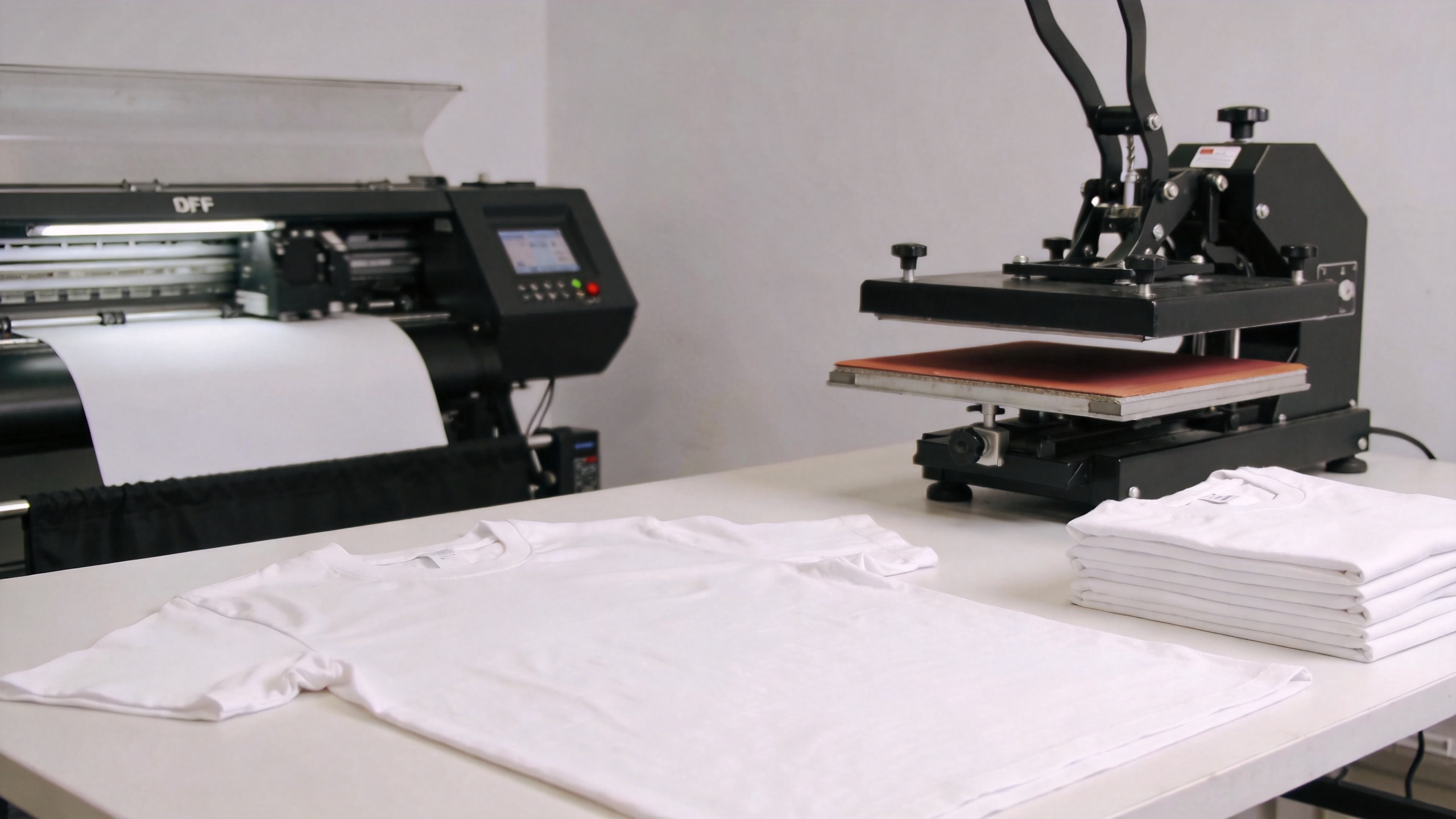
DTG: Choose It When Soft Feel and Direct Garment Printing Drive the Offer
DTG applies ink directly to the garment, making it especially relevant for detailed artwork on suitable fabric compositions and for businesses that sell a soft, breathable print feel. It is often considered for print-on-demand and low-quantity custom orders because the setup can be straightforward once artwork and garment preparation are ready.
However, DTG is not simply “press print.” Dark garments commonly require pretreatment, and consistency depends on garment quality, pretreat application, curing, artwork preparation, and daily machine care. White ink management is a practical operating responsibility. If your team will not follow cleaning routines or your order mix is dominated by polyester and varied blends, the apparent convenience can disappear in reprints and downtime.
Choose DTG when the customer experience depends on a soft direct print, your core garments suit the process, and your expected order volume can absorb the preparation and maintenance discipline. For logo-heavy work or broad mixed-fabric demand, compare its total workflow against DTF before deciding.
Heat Transfer: A Focused Option for Personalization and Controlled Labor
Heat transfer is a broad category, so buyers should separate the transfer material from the business model. Vinyl-based workflows can be effective for names, numbers, simple logos, and specialty finishes. Pre-made transfers can also let a shop add decoration capacity without bringing every printing stage in-house.
For tshirt with logo printing, heat transfer can be attractive when the artwork is simple, order sizes are manageable, and a trained operator can keep cutting, weeding, positioning, and pressing organized. The trade-off is labor. Complex multi-color designs can consume time quickly, while large solid areas may affect feel and breathability. Test wash performance, edge behavior, and adhesion on each garment type you intend to sell.
Heat transfer is therefore not a “cheap substitute” for every application. It is a focused tool: valuable when its strengths align with the jobs, staff time, and finishing standards of your operation.
A Practical Comparison for Commercial Buyers
| Decision factor | DTF | DTG | Heat transfer |
|---|---|---|---|
| Typical starting use | Mixed-fabric, full-color transfer workflow | Soft-feel direct prints on suitable garments | Simple logos, names, numbers, specialty effects |
| Cost drivers | Film, powder, ink, curing, maintenance, pressing | Ink, pretreat, garment prep, curing, maintenance | Material, cutting/weeding or purchased transfers, pressing labor |
| Operational risk | System calibration and consumable handling | Pretreat and white-ink maintenance consistency | Labor time and placement consistency |
| Growth question | Can curing and pressing keep pace with transfer output? | Can the team sustain garment prep and daily care? | Will manual finishing limit throughput? |
Use the table as a conversation starter, not a specification sheet. The right answer changes with your actual garments, artwork, labor cost, and local sales price.
Build a Buy-or-Wait Decision Around Margin
To make the decision commercially, calculate a simple contribution estimate for your five most common jobs. Include blank garment cost, consumables, operator minutes, electricity or outsourced transfer cost, packaging, expected spoilage, and a maintenance allowance. Then compare that figure with your target selling price and the turnaround promise you want to make.
- List your anticipated monthly jobs by quantity, fabric, and artwork type.
- Run real samples for the two most likely methods on the same garments.
- Record setup time, print time, pressing or curing time, and failed pieces.
- Price the completed job—not only the printed image—and compare gross contribution.
- Choose the workflow that protects quality and margin for the majority of your jobs, with an outsourcing plan for exceptions.
This matters in a t shirt printer purchase because a stable workflow is easy to undervalue during a feature comparison. A slightly higher initial investment may be justified if it reduces reprints, expands acceptable garment types, or makes it easier for staff to deliver consistent results. Conversely, if orders are still uncertain, a lean heat-transfer setup or outsourced transfers may be the safer way to validate demand before expanding.
Buyer Search Checklist for T-Shirt Printing Equipment
Use these brief prompts when comparing suppliers and workflows. They keep a search for tshirt printers tied to a practical production question rather than a feature list.
- Can tshirt printers handle our usual cotton and blend garments?
- Which tshirt printers workflow fits one-off full-color orders?
- How should a t shirt printer budget include curing and heat-press capacity?
- Can a t shirt printer workflow support dark garments consistently?
- What daily care does a t shirt printer require from operators?
- Will tshirt with logo printing need vinyl, transfers, or direct printing?
- How does tshirt with logo printing change labor time for names and numbers?
- What sample tests should tshirt with logo printing include before launch?
- Which tshirt printers option gives the most reliable turnaround for our mix?
- How will tshirt printers affect reprint risk and finished-shirt margin?
- Can a t shirt printer setup grow without creating a pressing bottleneck?
- Does tshirt with logo printing need different settings for each fabric type?
- Which tshirt printers supplier can support a sensible production trial?
- Can tshirt printers output be scheduled around seasonal order peaks?
- How should a t shirt printer operator document successful settings?
- Does tshirt with logo printing require a different finishing standard for sportswear?
Final Recommendation: Match the Method to the Business You Are Building
Choose DTF when you need versatile full-color transfers across a varied garment mix and are prepared to manage the complete ink-film-powder-curing system. Choose DTG when a soft direct print on suitable garments is central to your offer and you can maintain disciplined garment preparation and machine care. Choose heat transfer when personalization, simple graphics, or controlled specialty work define the order mix.
The most suitable tshirt printers fit your production reality—not simply the longest feature list. Test representative jobs, model the full cost per finished shirt, and select a workflow that lets your team meet quality, turnaround, and margin goals as volume grows.













