 EN
EN


DTF Printer Price Guide: How Much Should You Budget for Your Setup?
Shopping for direct to film printers can feel deceptively simple: compare a few machine prices, choose a print width, and order. In practice, the printer is only one part of a production system. For a decorator, reseller, or growing print shop, the better question is not “What is the lowest-cost machine?” but “What budget produces reliable, sellable transfers at the volume I need?”
This guide breaks down how to budget for direct to film printers, from a compact starter workflow to a higher-throughput setup. It also highlights the costs that are easy to miss before the first print: curing, heat pressing, RIP workflow, consumables, maintenance, freight, and time.
Start With the Job Your DTF Setup Must Do
Direct to film printers create a transfer by printing artwork onto coated film, applying hot-melt powder, curing it, and pressing it onto a garment. That workflow is flexible, but it means a printer purchase should match the order profile behind it. A shop producing short runs, samples, and personalized apparel has different needs from a dealer supplying transfers every day.
Before comparing direct to film printers, write down four operating assumptions:
- Expected transfers per day and the busiest production window.
- Typical artwork size, garment mix, and need for white ink.
- Whether curing and powder handling are manual, semi-automatic, or integrated.
- Who will perform daily nozzle checks, ink circulation checks, and cleaning.
These answers keep a low purchase price from becoming an expensive bottleneck. They also make supplier quotes easier to compare because you can ask for the same workflow, rather than comparing a printer-only offer with a package offer.
Budget Tier 1: Under $500—What This Range Usually Means
At the very low end, buyers may see converted desktop units, used equipment, or partial offers. These options can be useful for learning the process, but they rarely represent a complete commercial DTF workflow. When evaluating entry-level direct to film printers, confirm exactly what is included: printer, RIP software, ink set, film, powder, support, and any required modifications.
The main risk in this range is treating the machine price as the startup budget. A separate heat press, curing solution, consumables, spare maintenance items, and shipping can quickly change the total. If the objective is test production, keep expectations modest and reserve budget for trial material and operator training. If the objective is dependable paid production, compare the total package rather than the headline price.
Budget Tier 2: Around $2,000—A More Deliberate Small-Shop Setup
For many small apparel decorators, this is where direct to film printers begin to be evaluated as a business tool rather than an experiment. The exact configuration varies, but buyers should prioritize a documented workflow and practical support over a long list of unverified claims.
A useful starter purchase checklist includes:
- A DTF printer sized for the artwork and daily output you expect.
- RIP software and a clear file-preparation process.
- A heat press suitable for your common garment sizes.
- A powder application and curing method that fits your workspace.
- Initial DTF film, inks, powder, cleaning supplies, and spare consumables.
- Installation guidance, maintenance instructions, and a service contact.
Public market examples often place complete entry-level DTF workflows—printer, heat press, powder/curing equipment, and RIP software—in a much higher total range than a printer-only listing. Treat those figures as planning references, not quotes: freight, duties, local electrical requirements, accessories, and configuration choices all matter.
Budget Tier 3: $5,000 and Above—Plan Around Throughput and Downtime
Above this level, direct to film printers are usually purchased for higher capacity, wider media, or a more integrated workflow. The strongest business case is not simply “faster printing.” It is the ability to reduce manual touchpoints, keep transfer quality consistent, and serve a predictable volume without turning routine maintenance into production downtime.
Ask how the configuration handles white ink. White pigments can settle, so circulation and stirring procedures affect maintenance demands and print stability. Also ask what daily, weekly, and idle-period tasks the operator must complete. A machine that looks productive on a specification sheet may still be a poor fit if the shop cannot support its required care routine.
For buyers comparing wider or dual-head options, focus on usable output, labor flow, curing capacity, and after-sales response—not just a maximum speed figure. A production line moves only as fast as its slowest step.
Calculate Your Real Startup Cost, Not Just the Printer Cost
A practical budget for direct to film printers has five buckets. First is the printer configuration. Second is transfer finishing: powder handling, curing, and heat pressing. Third is consumables: ink, film, powder, cleaning fluid, and test material. Fourth is site readiness, including ventilation, electrical capacity, space, and stable storage conditions. Fifth is working capital for learning, rejected prints, and the first replenishment order.
| Budget area | Questions to ask before ordering |
|---|---|
| Printer | What print width, output level, and ink-management features are included? |
| Finishing | Is powder application and curing manual or integrated, and where is the bottleneck? |
| Consumables | Which ink, film, and powder are approved, and what are their lead times? |
| Environment | What electrical, ventilation, temperature, and humidity guidance applies? |
| Support | What installation, remote troubleshooting, parts, and maintenance support is available? |
For a US-oriented buyer researching dtf printer usa options, also separate the ex-works or factory price from landed cost. Freight method, insurance, customs, taxes, delivery, and local setup can materially change the cash required before production begins.
Match the Machine to Your Growth Path
Choosing among direct to film printers is easier when you choose a next-stage workflow, not a forever machine. A compact A3-format system can make sense for samples, custom orders, and controlled daily volume. For buyers who expect broader transfer formats or sustained output, a wider production model may be more practical when the accompanying curing and finishing capacity is planned at the same time.
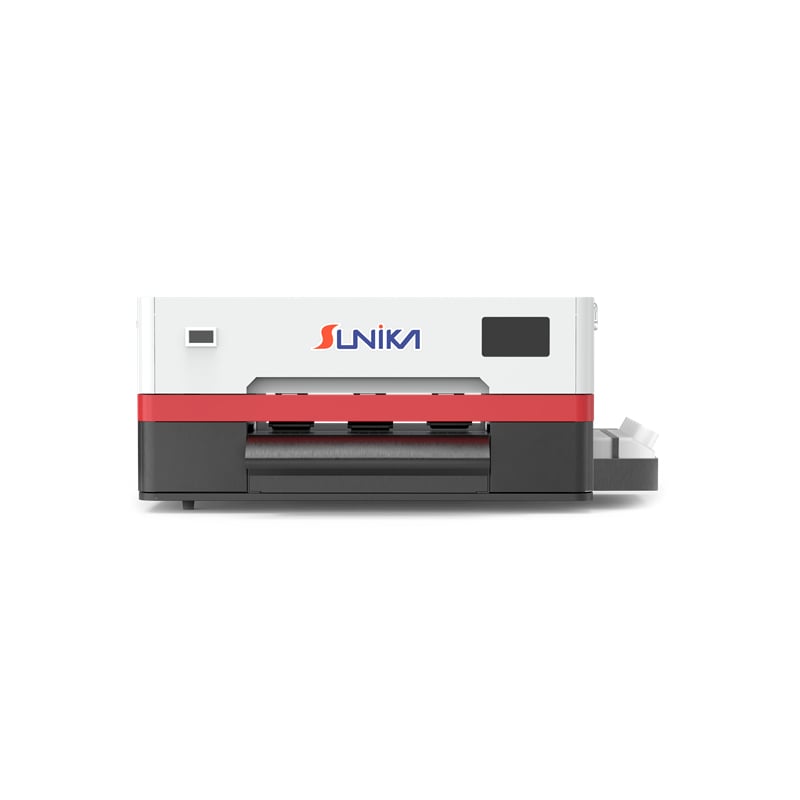
For example, Sunika lists a Sunika SK-A3 DTF Printer F1080 330mm A3 Direct to Film Printer and a Sunika SK60 DTF Printer Dual I3200 600mm Tee Shirt Printer. Use product pages as a starting point for a configuration conversation; confirm the current package, applicable voltage, included accessories, production assumptions, and service scope before committing.
A Supplier Quote Checklist for Direct to Film Printers
Before approving a quote for direct to film printers, request an itemized list. It should identify the printer model, printheads, RIP software, included accessories, ink and powder package, curing method, heat press status, spare parts, warranty terms, training, shipping terms, and estimated delivery schedule. If a quote does not explain what happens after installation, it is incomplete.
Then compare the likely cost per sellable transfer, not just the machine price. Include material use, labor, maintenance time, reprints, and the capacity you can realistically operate. This cost-per-print mindset helps distinguish a low initial invoice from a setup that can support margin over time.
Final Budget Advice
The right budget for direct to film printers depends on output, operator discipline, and the level of workflow integration your business needs. A lower-priced unit can be appropriate for controlled learning; a more complete package can be the safer choice when dependable production and customer deadlines matter. Build a budget that includes the whole transfer process, leave room for consumables and setup, and ask suppliers to document the configuration in writing.
When you compare direct to film printers this way, you are not merely buying a machine. You are budgeting for a repeatable apparel-decoration operation.












