 EN
EN


T-Shirt Logo Printing Methods Compared: DTF, Screen Print, HTV and Embroidery
Choosing the right process for tshirt with logo printing is less about finding one universal winner and more about matching the decoration method to the artwork, garment, order size, and expected wear. A detailed multicolor logo for a short campaign needs a different workflow from a simple one-color mark for 500 staff shirts. For custom apparel businesses, that distinction protects both margin and customer expectations.
This comparison covers DTF, screen printing, heat transfer vinyl (HTV), and embroidery—the four methods most often considered for tshirt with logo printing. Use it as an early-stage decision guide before requesting samples or setting a production plan.
Start with the four decisions that change the answer
Before comparing equipment or unit prices, define four variables: artwork complexity, order quantity, garment mix, and how the finished logo should feel. A photo-like design with gradients has different needs from a two-color chest logo. A one-off prototype has different economics from a repeat wholesale run. Likewise, a logo on cotton team tees may be handled differently from a logo on polyester performance apparel.
- Artwork: Count colors, gradients, tiny type, and fine lines.
- Volume: Separate samples and short runs from repeat bulk orders.
- Garment: Confirm fabric composition, color, stretch, and print area.
- Wear expectation: Consider wash frequency, breathability, texture, and logo placement.
That brief makes tee shirt printing decisions clearer and avoids comparing methods on price alone.
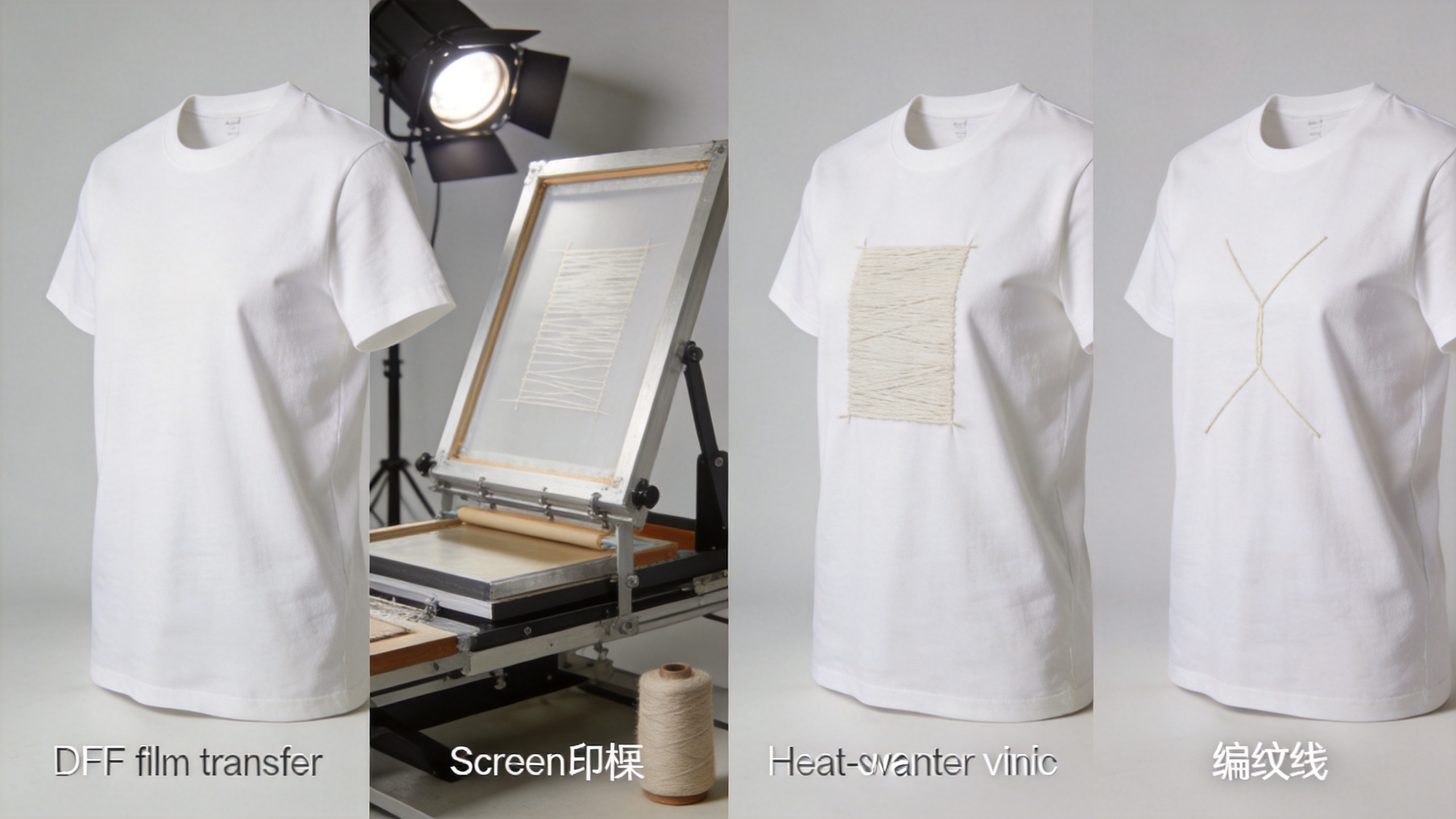
DTF: flexible for detailed logos and short-run production
DTF prints the design onto film, applies adhesive powder, cures it, and transfers the image with heat. For tshirt with logo printing, its key advantage is digital flexibility: full-color artwork, gradients, small lettering, and varied garment colors can be handled without preparing a separate screen for every color.
DTF is often practical when a buyer needs multiple logo versions, limited quantities, or quick artwork changes. It can be especially useful for short-run t shirt logo printing where setup time would otherwise dominate the job. The trade-off is hand feel. A large solid-color transfer may feel more like a layer on the fabric than ink printed into it, so test a representative design on the target garment.
For operations evaluating in-house production, the verified product pages for the Sunika SK60 DTF Printer Dual I3200 600mm Tee Shirt Printer and the SK-A302 12inch DTF printer Epson F1080 dual head for tshirt provide starting points for reviewing available DTF printer formats. Match any equipment decision to expected daily volume, operator workflow, consumables planning, and maintenance capability.
Screen printing: strong economics for repeat, simple bulk designs
Screen printing pushes ink through a stencil onto the garment. Because each color generally requires its own screen and setup, it is rarely the simplest route for a tiny one-off order or a complex photographic logo. Its advantage appears when artwork is bold, color count is controlled, and quantity is high enough to spread setup work across many pieces.
For company uniforms, event shirts, or distributor programs with repeat designs, screen printing can deliver consistent, durable-looking results and competitive per-unit economics. Proper curing matters as much as the method itself. Ask the production team to define the garment, ink system, curing process, and expected wash testing rather than treating “screen printed” as a complete quality specification.
HTV: a practical option for names, numbers, and simple personalization
HTV is cut from colored film and heat pressed onto the garment. It is a useful complement to tshirt with logo printing when the design is simple: a name, number, short word, or clean single-color mark. It works well for personalized sportswear, staff identifiers, and small runs where each garment may need different text.
The limits are easy to spot on complex artwork. Multi-layer designs take more labor, very small details may be harder to weed cleanly, and large film areas can feel less breathable. HTV is a targeted personalization tool, not an automatic substitute for full-color tee shirt printing.
Embroidery: premium texture for compact logo placements
Embroidery builds the design with thread rather than ink or film. It suits compact left-chest logos, caps, polos, outerwear, and workwear where dimension and a premium tactile finish matter. Thread holds up well in many demanding-use scenarios, but embroidery is not ideal for every T-shirt graphic.
Fine gradients, photographic images, and large filled areas can become difficult or heavy. A small embroidered logo can look polished; a large embroidered back graphic can alter drape and comfort. For t shirt logo printing on lightweight tees, assess stabilizer use, stitch density, and the garment’s fabric weight before committing.
Comparison table: choose by business requirement
| Method | Best fit | Design strength | Volume fit | Key watch-out |
|---|---|---|---|---|
| DTF | Detailed, multicolor custom logos | Gradients, fine detail, digital artwork | Short runs to varied orders | Large solid prints may feel heavier |
| Screen print | Repeat bulk programs | Bold, controlled-color logos | Higher quantities | Screen setup rises with colors |
| HTV | Names, numbers, simple personalization | Clean shapes and text | Small personalized runs | Layering adds labor and bulk |
| Embroidery | Premium compact branding | Textured, stitched logos | Small to repeat branded programs | Not suited to large or photo-style art |
A simple selection path for custom-logo buyers
- If the logo uses gradients, many colors, or frequent artwork changes, evaluate DTF first.
- If the logo is bold and repeatable across a larger order, price screen printing with realistic setup assumptions.
- If every garment has a different name or number, test HTV for the personalization portion.
- If the logo is small and the brand needs texture, compare embroidery samples on the actual garment.
- For any method, approve a physical sample after washing and wear testing—not just a digital proof.
Make the final choice with a sample, not a slogan
The right tshirt with logo printing method is the one that fits the actual order rather than a generic claim about quality. Build a short job brief, request comparable samples, and evaluate color, edge detail, stretch, hand feel, and wash performance on the intended fabric. This approach helps custom apparel teams explain trade-offs clearly and choose a production route they can repeat with confidence.













