 EN
EN


How to Start a Custom T-Shirt Printing Business Using DTF Technology
Starting a tee shirt printing business is less about buying the biggest machine and more about building a repeatable path from artwork to a finished garment. Direct-to-film (DTF) technology gives a new custom apparel printing shop a flexible route into short runs, logo orders, event shirts, and on-demand designs. This guide focuses on the practical choices that help a first-time operator launch with a manageable workflow.
Before committing to equipment, define the orders you want to win. A local sports team, a small brand ordering tshirt with logo printing, and a corporate event buyer each value different things: turnaround time, color consistency, garment options, or repeat-order simplicity. That choice should drive your setup, sample kit, pricing, and sales message.
1. Pick a Clear Offer Before You Build the Shop
A broad “we print anything” offer can make early quoting slow and inconsistent. Start with two or three service lanes that share a similar production flow: small-batch branded tees, creator merchandise, and staff or event apparel are sensible examples. For each lane, decide your preferred order size, standard turnaround, artwork policy, garment sourcing method, and proof-approval process.
DTF is useful when customers expect vivid, detailed artwork and small or mixed orders. It can support custom apparel printing across many compatible garment types, but every fabric and transfer combination should be tested before it becomes a promised service. Build a simple intake form that captures garment color, print location, artwork format, quantity, deadline, and whether the customer needs tshirt with logo printing on more than one garment style.
2. Build the Equipment List Around Your Daily Workflow
A working DTF line is a system, not only a printer. Your initial checklist normally includes a DTF printer, compatible inks and film, adhesive powder, a curing solution, a heat press, a computer and RIP workflow, ventilation appropriate to the workspace, storage, and basic finishing tools. Leave room in the budget for training time, test prints, maintenance supplies, and replacement consumables.
Published startup guides often use planning ranges of roughly US$3,000–$6,000 for a basic DTF printer, US$500–$1,500 for a heat press, and US$500–$1,000 for initial consumables. Treat these figures as market-planning context rather than a supplier quote: printer configuration, output expectations, local compliance, shipping, and support needs can change the total materially.
For growing production, compare workflow fit rather than chasing specifications in isolation. A wider-format option such as the Sunika SK60 DTF Printer Dual I3200 600mm Tee Shirt Printer may be relevant when you need to plan for more transfer output, while a compact option such as the SK-A302 12inch DTF printer can be considered for a smaller production footprint. Confirm current specifications, compatibility, and support scope with the supplier before purchase.
3. Create a Small, Controlled Starter Inventory
Do not overbuy every film finish, ink set, and blank garment at launch. Keep enough stock to make dependable samples and fulfill your first defined order types, then review what actually moves. Track film, ink, powder, blank-garment, packaging, and labor consumption per order. This turns tee shirt printing pricing from a guess into a process.
Your heat-application station matters as much as your artwork. A stable, repeatable press routine is essential for consistent transfers. When evaluating equipment such as the Sunika High-Pressure Flat Heat Press Machine for DTF Printer, confirm its operating workflow and match it to the transfer materials you intend to use. Record the approved heat, time, pressure, and peel procedure for each tested material combination.
4. Make Samples Before You Promise Performance
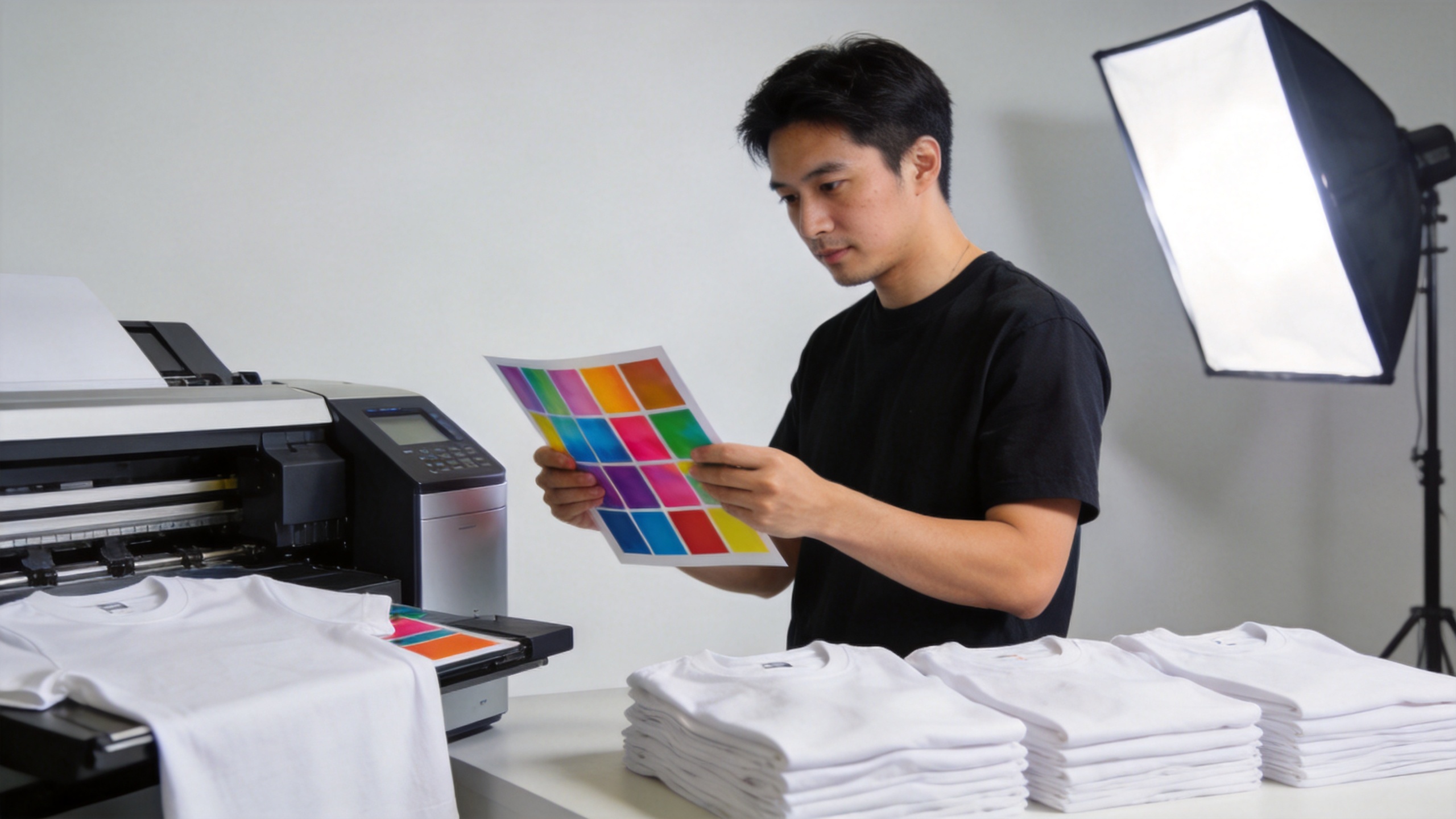
Your first sales asset should be a physical sample kit, not a long equipment list. Produce examples on the garment colors and fabrics your target buyers request most often. Include a fine-detail design, a bold logo, a large back print, and a small chest placement. Label each sample with the transfer and garment combination used.
Wash testing should be part of your launch checklist. Durability is affected by application quality, fabric type, and wash care, so avoid promising a universal wash-count claim. Instead, test representative samples under a documented routine, inspect them after repeated washes, and turn the result into clear care instructions. This is a more credible way to sell tshirt with logo printing than making an unverified durability claim.
5. Price for Repeatable Profit, Not Just the First Sale
For every quote, calculate the blank garment, transfer materials, production labor, artwork preparation, packaging, payment fees, delivery, reprint allowance, and target margin. Then set a minimum order value or setup policy that protects small jobs from consuming all of your production time. Quote by print location and design complexity where appropriate, rather than applying one flat price to every request.
Keep the proposal easy to read: show the quantity, garment, print locations, artwork assumptions, turnaround, and approval deadline. For repeat customers, save the approved artwork and production notes. Faster, more accurate reorders are one of the strongest operational advantages a new tee shirt printing business can create.
6. Find the First Customers Through Useful Proof
Start with buyers who can understand your samples quickly: local clubs, cafés, gyms, schools, event organizers, small brands, and marketing agencies. Post short process videos, close-up sample photos, and before-and-after garment mockups. Offer a sample appointment or a paid sample pack that can be credited toward a qualifying order.
Ask every early customer for a production brief rather than only a logo file. Their deadline, expected reorder pattern, color needs, and garment preference reveal whether the job is a good operational fit. As orders arrive, use the same checklist for artwork approval, production, quality inspection, packing, and delivery. Consistency is what converts a one-off custom apparel printing order into an account.
A 30-Day DTF Launch Plan
- Week 1: choose target order types, list startup costs, and define your quote template.
- Week 2: set up the workflow, create production records, and make controlled test transfers.
- Week 3: build a sample kit, test wash care, photograph results, and finalize service packages.
- Week 4: contact a focused list of local or online prospects and refine pricing from real quote feedback.
A custom T-shirt business grows through reliable execution: clear offers, documented settings, accurate pricing, and samples that show what buyers can expect. Start narrow, measure every job, and expand the service range only when your tee shirt printing workflow is consistently under control.













