 EN
EN


Best DTF Printers for Small Business: Top Models Compared in 2025
For a small apparel-decoration shop, choosing between DTF printers is less about finding a single universally suitable machine and more about matching a system to the orders you actually run. A compact shop handling test runs, local team shirts, and short custom batches needs a different setup from a business preparing daily rolls of transfers. This guide compares practical DTF printer formats for businesses producing roughly 500 finished pieces per month or less.
Think beyond the printer alone. Direct to film printers work as a production chain: RIP software, white ink circulation, PET film handling, powder application, curing, cleaning access, and operator time all affect the cost and consistency of each transfer.
Start With the Workload, Not the Marketing Speed
Small businesses often outgrow a machine because they bought for an occasional peak week rather than a normal week—or buy too much capacity and then struggle to keep white ink moving. Before comparing DTF printing machines, list your expected weekly orders, common artwork widths, number of active designs, available bench space, and the time one person can devote to maintenance.
- Low-volume launch work: samples, side-hustle orders, and short runs favor a compact A3 or approximately 12-inch format.
- Growing local fulfillment: recurring club, school, and small-brand orders may justify a wider workflow if batches regularly queue.
- Roll-based production: a 600 mm platform makes more sense when gang sheets and daily output can keep the system productively occupied.
For many first-time buyers, the sensible goal is reliable turnaround, not maximum theoretical output. Ask a supplier to explain the routine for startup, shutdown, nozzle checks, white-ink agitation, and cleaning; these details matter as much as headline speed.
A3 and 12-Inch DTF Printers: A Practical Entry Point
Compact DTF printers can suit small studios with limited floor space and modest, variable demand. They are easier to place near a heat press and can be a practical way to learn the direct-to-film workflow before committing to a wider roll system. An A3-width unit is generally most useful when designs are small or medium and jobs are produced in controlled batches.
For example, the Sunika SK-A3 DTF Printer F1080 330mm A3 Direct to Film Printer is a relevant format to evaluate when your work is centered on compact transfer sheets. Treat the product page as a starting point for a supplier discussion rather than assuming every configuration fits your production plan.
The trade-off is throughput. Small sheets can mean more loading, trimming, and job changes when orders grow. If your artwork frequently requires large gang sheets or you are routinely splitting jobs into many small runs, an entry-level format may become a bottleneck.
When a 600 mm DTF Printer Becomes Worth Considering
Wider DTF printers are built around roll handling and larger gang-sheet workflows. A 600 mm option can improve layout flexibility for shops with repeating production, but it also asks for more workspace, a clearer curing plan, and a disciplined maintenance routine. For a small business below 500 pieces per month, wider capacity is most sensibly justified by artwork mix and batch efficiency—not by the idea that bigger is automatically more professional.
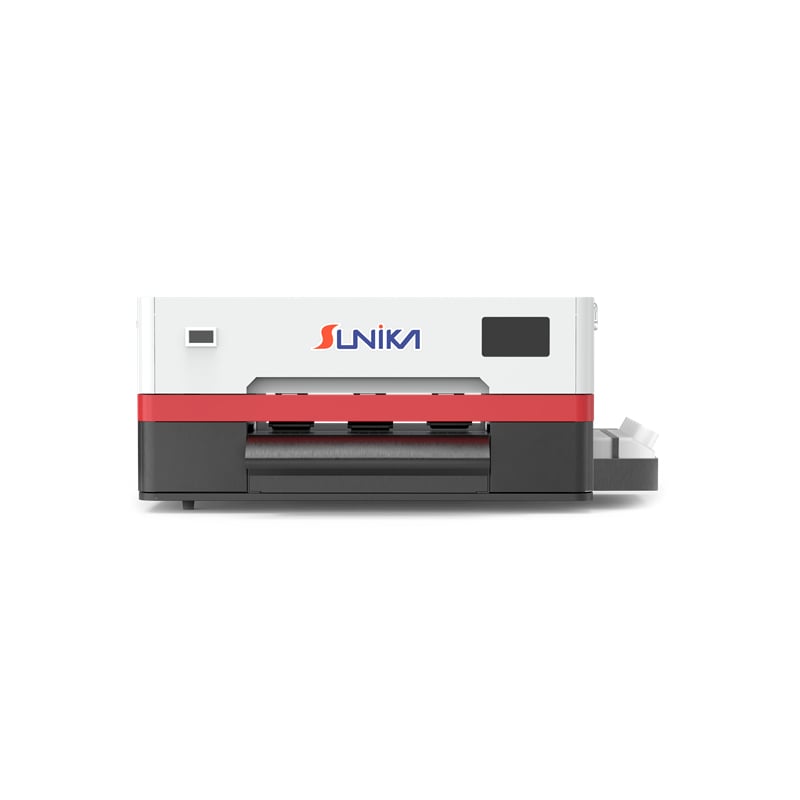
One product format to compare is the Sunika SK60 DTF Printer Dual I3200 600mm Tee Shirt Printer. When reviewing direct to film printers in this class, request a demonstration using file sizes and substrates similar to your own jobs. Confirm the complete workflow around film feeding, powder handling, curing, and cleaning before judging a system only by printhead naming or width.
Compare the Cost You Operate, Not Only the Price You Pay
A useful comparison sheet separates purchase price from the cost of keeping DTF printing machines ready each week. Include ink and film consumption, powder and curing requirements, wasted setup material, operator labor, cleaning supplies, software, spare-part availability, and support response. A lower initial price may not be the lower-cost choice if maintenance steps interrupt the person responsible for packing and customer service.
| Decision factor | Why it matters for a small business | What to ask |
|---|---|---|
| Printhead and ink workflow | Affects daily routines and recovery from idle periods | How is white ink circulated and what is the shutdown checklist? |
| Effective production flow | Printing is only one stage of a transfer order | How do RIP, film, powder, and curing steps fit together? |
| Service access | Downtime can delay small, time-sensitive orders | What remote guidance, parts, and training are available? |
| Expansion path | Prevents a premature replacement | Can the machine match your next 6–12 months of order mix? |
A Simple Selection Path for Monthly Output Below 500 Pieces
- Map three real orders. Use your typical small logo sheet, a multicolor shirt graphic, and your widest recurring design.
- Choose the smallest format that handles those orders without excessive tiling. This keeps capital and daily maintenance proportional to demand.
- Validate the complete workflow. Run a sample from RIP setup through curing and pressing, then inspect wash-ready transfers.
- Budget for consistency. Reserve time and materials for routine care instead of viewing maintenance as an exception.
- Plan the upgrade trigger. Define the order volume, gang-sheet frequency, or turnaround issue that would justify moving to wider DTF printers.
Final Recommendation
The right DTF printers for a small business are the ones your team can operate consistently, maintain without guesswork, and keep busy enough to justify. Start with an A3 or 12-inch-oriented workflow if order sizes are varied and space is tight. Consider 600 mm direct to film printers when roll production and larger gang sheets are routine, supported by a stable daily workload. Compare demos against your actual files, ask for clear maintenance guidance, and choose a system that improves the whole transfer workflow—not just the print stage.













