 EN
EN


What Is DTF Printing? Process, Materials and Benefits
If you are looking up the DTF printing meaning for the first time, start with the name: DTF means Direct to Film. Rather than printing artwork straight onto a shirt, the workflow prints the image onto a coated PET film, prepares that print with adhesive powder, cures it, and transfers it with heat and pressure. That simple sequence explains why the DTF printing meaning matters to apparel decorators, print shops, and new production teams: the design is prepared before it meets the garment.
For a business that handles varied fabrics and small batches, understanding the DTF printing meaning is more useful than memorizing a list of machine features. The method connects digital artwork, consumables, heat, and operator control. Each link affects the final feel, color, and wash performance.
DTF printing meaning: what happens in the process?
The DTF printing meaning describes a transfer workflow, not just a printer category. A RIP-ready design is printed in color and white ink on a coated PET film. While the ink is still suitable for bonding, hot-melt powder is applied to the printed area. Excess powder is removed, the adhesive is cured, and the finished transfer is pressed onto the chosen textile. After the appropriate cooling stage, the film is peeled according to the film supplier’s instructions.
- Prepare the artwork. Transparent areas, fine details, and white underbase settings should be checked before printing.
- Print to PET film. The color layers and white ink form the image that will become the transfer.
- Apply adhesive powder. Powder should cover the printed area evenly while loose material is removed.
- Cure the adhesive. Curing melts or activates the powder into a bondable layer; time and temperature must match the consumable guidance.
- Heat press and peel. The transfer is pressed onto the garment, then peeled using the film’s hot-, warm-, or cold-peel requirements.
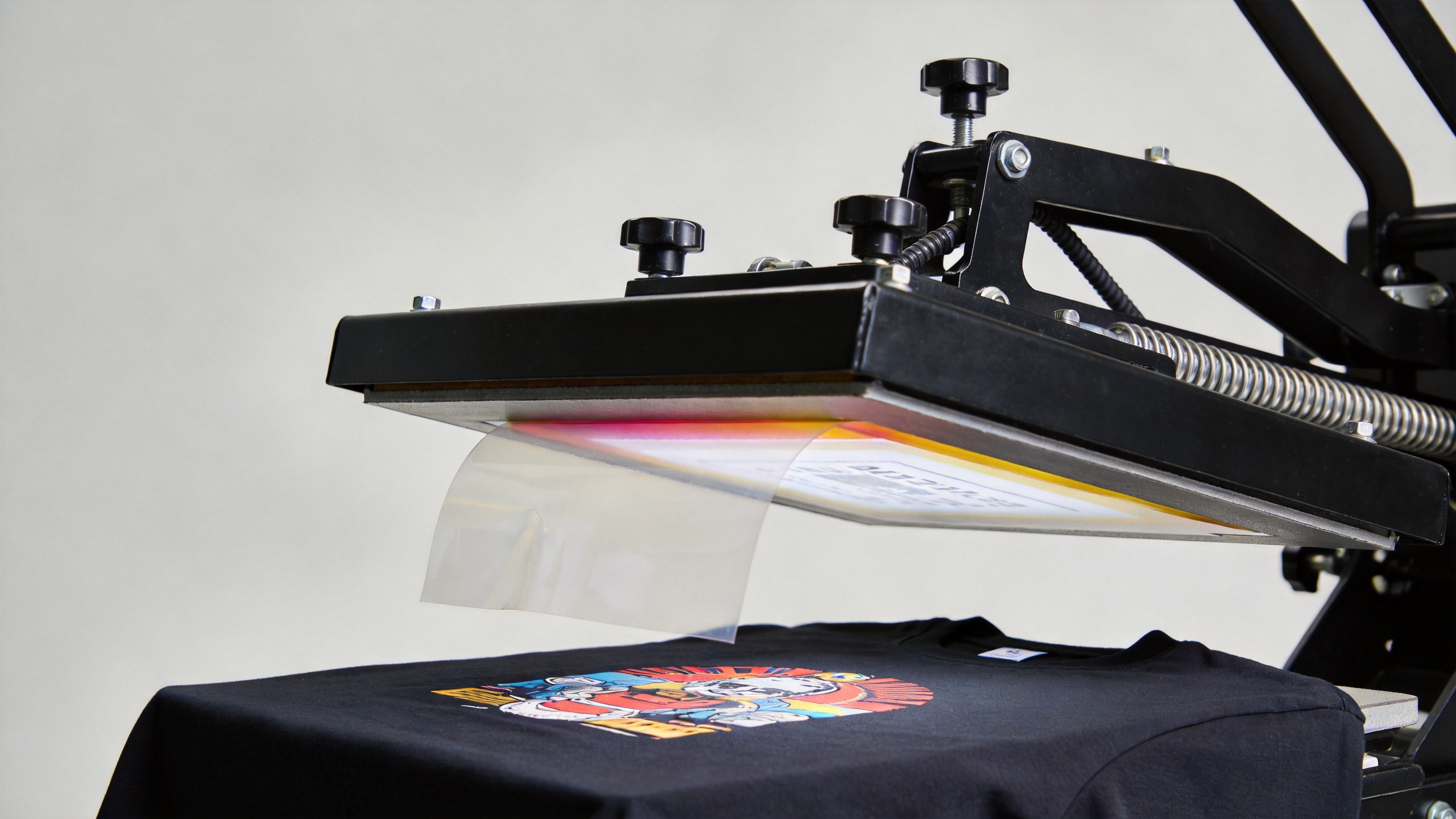
This sequence is the practical DTF printing meaning: a printable transfer is made first, then applied later. It can help teams separate artwork preparation from garment decoration and organize production around transfer inventory when that suits their workflow.
The materials behind dtf transfer printing
Reliable dtf transfer printing depends on a matched materials system. PET film is the carrier for the image. DTF inks create the visual layers, with white ink often providing the base needed for strong color on dark garments. Hot-melt powder forms the adhesive layer. A heat press supplies controlled pressure and heat for the final transfer. Cleaning supplies and consistent maintenance also matter because ink flow and white-ink management influence print consistency.
It is tempting to treat these supplies as interchangeable, but the DTF printing meaning includes their interaction. Film coating affects how ink sits on the surface; powder behavior affects edge detail; curing affects the adhesive layer; and pressing settings affect how that layer meets the fabric. Start with the documented settings for the specific film, powder, ink, and press combination, then test on the actual textile before committing to a production run.
| Material or tool | Its job in the workflow | What to check |
|---|---|---|
| PET film | Carries the printed image until transfer | Coating type and peel instructions |
| DTF inks | Create color and white image layers | Profile, maintenance routine, and ink compatibility |
| Hot-melt powder | Creates the adhesive layer | Even coverage and curing guidance |
| Heat press | Transfers the cured image to the garment | Stable temperature, time, and pressure |
Why teams choose DTF for garment decoration
The main benefit behind the DTF printing meaning is flexibility. The process is commonly used for detailed, full-color artwork, including gradients and small design elements. Because the transfer is prepared on film, it can be used across many garment types after suitable testing. That can be useful for custom apparel businesses handling mixed order sizes, changing designs, or garments in different colors.
DTF transfer printing can also simplify certain order patterns. A shop may prepare transfers before garments arrive, then press the designs when an order is ready. This does not make DTF the right choice for every job. Very large runs, particular fabric finishes, or a desired ultra-light hand feel may lead a decorator to evaluate other methods too. A good decision comes from comparing the artwork, substrate, run size, finish expectation, and available labor—not from assuming one process wins in every case.
Where DTF printing works well
When people ask about the DTF printing meaning, they often want to know where it fits. DTF is widely considered for T-shirts, hoodies, workwear, tote bags, promotional textiles, and custom teamwear. It is especially worth testing when the artwork contains multiple colors, fine lines, or variable names and numbers. The critical word is “testing”: fabric composition, surface treatments, and garment color can change the result.
For teams building an entry-level production setup, the Sunika SK-A3 DTF Printer F1080 330mm A3 Direct to Film Printer is a relevant on-site product page to review alongside your own output-width and workflow requirements. The product title identifies a 330 mm A3 direct-to-film printer; confirm current specifications, consumable compatibility, and service arrangements directly before purchase.
How to assess a DTF workflow before you buy
Use the DTF printing meaning as a checklist for evaluating a workflow. First, define the artwork you expect to handle: photographic color, opaque white elements, small text, or simple logos. Next, identify the garments and fabrics you will test. Then map the production steps, including printing, powder application, curing, pressing, peeling, and maintenance. A setup is only productive when every step has enough capacity for the order volume.
- Ask which film and powder are recommended for the planned fabrics.
- Plan routine white-ink circulation and cleaning instead of treating maintenance as an afterthought.
- Use test transfers to document pressing settings for each garment family.
- Evaluate ventilation and safe handling requirements for powder and curing according to local rules and supplier guidance.
- Keep a small approved-sample library so operators can compare color, adhesion, and finish.
Frequently Asked Questions
What is the simplest DTF printing meaning?
The simplest DTF printing meaning is Direct to Film: print a design on special PET film, add and cure adhesive powder, then heat-press the transfer onto fabric.
Is dtf transfer printing only for cotton?
No. DTF transfer printing is used across a range of textiles, but compatibility depends on the garment and the specific consumables. Test each fabric and follow the material supplier’s pressing instructions.
Does DTF replace every other decoration method?
No. The DTF printing meaning describes one useful transfer method. Screen printing, DTG, embroidery, and other processes can be preferable depending on the design, run size, fabric, finish, and production goals.
Final takeaway
The DTF printing meaning is clearly understood as a controlled chain: artwork is printed on PET film, prepared with powder, cured, and pressed onto a textile. Its appeal comes from flexible full-color transfer production, while its consistency depends on matched materials, disciplined settings, and real garment testing. Begin with a sample workflow, record what works, and scale only after the full chain performs reliably.













