 EN
EN


What Is a UV DTF Sticker? Materials, Process and Uses
A dtf uv sticker is a full-color decal made by printing UV-curable ink onto a transfer-film system rather than printing directly on the finished object. For print shops, gift brands, and promotional-product suppliers, this approach makes it possible to prepare detailed graphics first and apply them later to many rigid items. A dtf uv sticker is commonly used on smooth, hard surfaces such as glass, coated metal, stainless steel, acrylic, and many rigid plastics.
Although the name is close to textile DTF, the workflows serve different substrates. A garment DTF transfer is designed to be heat pressed onto fabric. A dtf uv sticker uses UV curing and pressure application, so it is intended for hard goods rather than apparel. Understanding that distinction helps buyers select equipment, films, and jobs more accurately.
How a dtf uv sticker is built
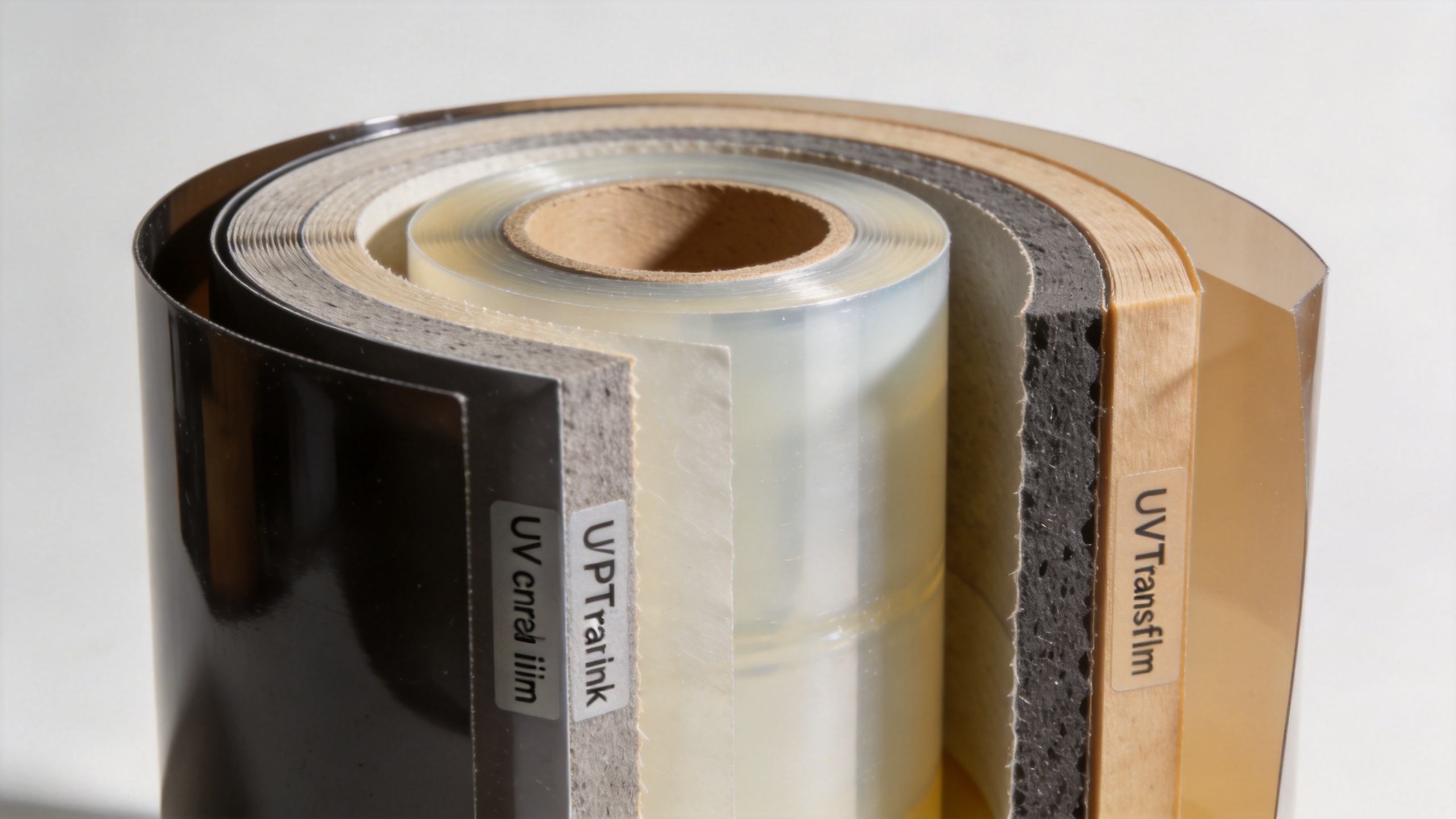
A typical dtf uv sticker uses two purpose-built films. The first is often called the A film: it carries the printable surface and adhesive layer. The second, often called the B film, acts as a laminating or transfer layer. Between them, a design may include white ink for opacity, color ink for the artwork, varnish for surface protection and texture, and adhesive layers that help the finished graphic bond to the target item.
The precise layer order and compatible consumables depend on the printer and material supplier. What matters operationally is that the film system keeps the artwork protected until application. UV lamps cure the printed ink into a solid layer during production, allowing the design to be handled as a transfer instead of requiring direct printing onto every cup, bottle, box, or panel.
- A film: the printable carrier that supports the ink and adhesive system.
- UV inks: white, color, and varnish layers that create opacity, color, and finish.
- B film: the laminated transfer layer used to carry and release the finished decal.
- Adhesive layer: the bonding component that contacts the cleaned target surface.
What is the uv dtf printing process?
UV DTF printing usually begins with artwork preparation. Operators mirror or arrange the design according to their software and film workflow, then print color, white, varnish, and adhesive-related layers onto the A film. UV light cures the ink almost immediately as the print is produced. Next, the printed film is laminated with B film to form a finished transfer.
To apply a dtf uv sticker, the operator cleans and dries the target item, positions the transfer without stretching it, presses it down with even pressure, and slowly removes the carrier film. A careful application process matters: trapped air, dust, fingerprints, or poor alignment can reduce the finished appearance. For cylindrical drinkware and other curved objects, controlled placement is especially useful because the decal should follow the contour without wrinkling.
- Prepare the artwork and select compatible films and inks.
- Print and UV-cure the required image layers on A film.
- Laminate B film to create the transfer.
- Clean the rigid substrate and apply the dtf uv sticker with even pressure.
- Peel the carrier slowly and inspect edges, fine details, and adhesion.
Where does a dtf uv sticker work well?
A dtf uv sticker is generally most suitable for smooth, hard, non-porous surfaces. Common commercial applications include branded tumblers, water bottles, glass jars, cosmetic containers, gift boxes, acrylic signs, laptop shells, phone cases, and small promotional items. It is attractive for short runs because shops can print several designs on film, store them briefly in a protected workflow, and apply each transfer when the blank item is ready.
Surface fit should be checked before a production run. A dtf uv sticker may be less predictable on heavily textured, flexible, greasy, dusty, silicone-coated, or low-surface-energy materials. Curves, seams, handles, and sharp edges can also complicate placement. Test transfers on the actual substrate and coating whenever the job has a durability requirement or a high-volume order.
Why businesses choose UV DTF decals
For many customizers, a dtf uv sticker offers a practical balance between visual detail and application flexibility. The transfer can carry small lettering, gradients, logos, and opaque graphics that may be difficult to produce consistently with manual vinyl cutting. Because the print is made on film first, operators do not need to load every irregular object through a direct-print setup.
It also helps separate printing from fulfillment. A team can create a set of transfers during one production window, then apply them to different hard goods as orders are assembled. This can simplify handling for personalized gifts, branded merchandise, and small-batch product decoration. Results still depend on artwork, ink curing, film compatibility, substrate preparation, and application technique, so a dtf uv sticker should be positioned as a tested production method rather than a universal solution.
Choosing equipment for uv dtf printing
When evaluating UV DTF printing equipment, look beyond printer width. Consider the ink configuration, white-ink circulation and maintenance design, curing control, film compatibility, RIP workflow, lamination process, operator training, and the service support available in your market. A machine should fit the transfer size, expected order volume, and level of automation your team can support.
For shops exploring 300 mm production, the Sunika Sk30-3 UV DTF printer is a relevant product category to evaluate alongside its documented workflow and consumable compatibility. Ask suppliers for current specifications, supported media, maintenance guidance, and sample results on your intended substrates before making a purchasing decision.
Key takeaways
A dtf uv sticker is a UV-cured, film-based transfer decal for decorating suitable hard surfaces. Its materials typically include a printable carrier film, UV ink layers, adhesive components, and a laminated transfer film. The method supports detailed graphics and flexible fulfillment, but good results require compatible materials, clean substrates, thoughtful placement, and testing. For businesses considering UV DTF printing, start with the target products and workflow, then choose equipment and consumables that can produce repeatable transfers for those real applications.













