 EN
EN


UV Flatbed Printer Quote Checklist for Acrylic and Wood Projects
Requesting a quote for a uv flat bed printer is much easier when you describe the work, not just the machine you think you need. Acrylic signs, wood décor, display panels, gift items, and branded fixtures can all be printed with UV technology, but they do not ask the same things of a printer. A useful quotation gives a supplier enough information to recommend a workable configuration, test the right samples, and state what is included.
This checklist is written for buyers comparing a uv printer for acrylic and a uv wood printer for commercial projects. The goal is not to name one universally correct machine. It is to help you ask questions that reveal whether a proposed setup fits your materials, artwork, production rhythm, and installation space.
Start With the Jobs You Need to Produce
Before asking for a price, list the products that create most of your expected volume. Include the finished size, quantity per job, material thickness, surface finish, and whether the item is flat or has raised edges. “Acrylic and wood” is a helpful start, but a supplier needs a clearer picture: cast or extruded acrylic, clear or colored stock, sealed plywood or raw timber, small plaques or full-size panels.
For a uv flat bed printer, the largest practical item is usually more important than the average item. State the maximum printable width and length you expect, plus the maximum object height. Add a margin for jigs, bleed, and handling. If your work includes irregular pieces, explain how they will be positioned; a flat table does not remove the need for stable registration.
- Provide a list of your five most common acrylic and wood jobs.
- State the largest panel size and the thickest finished object.
- Note whether the surfaces are clear, dark, coated, porous, textured, or uneven.
- Include expected daily or weekly quantities rather than a vague “high volume” label.
Prepare Material Samples, Not Just Artwork Files
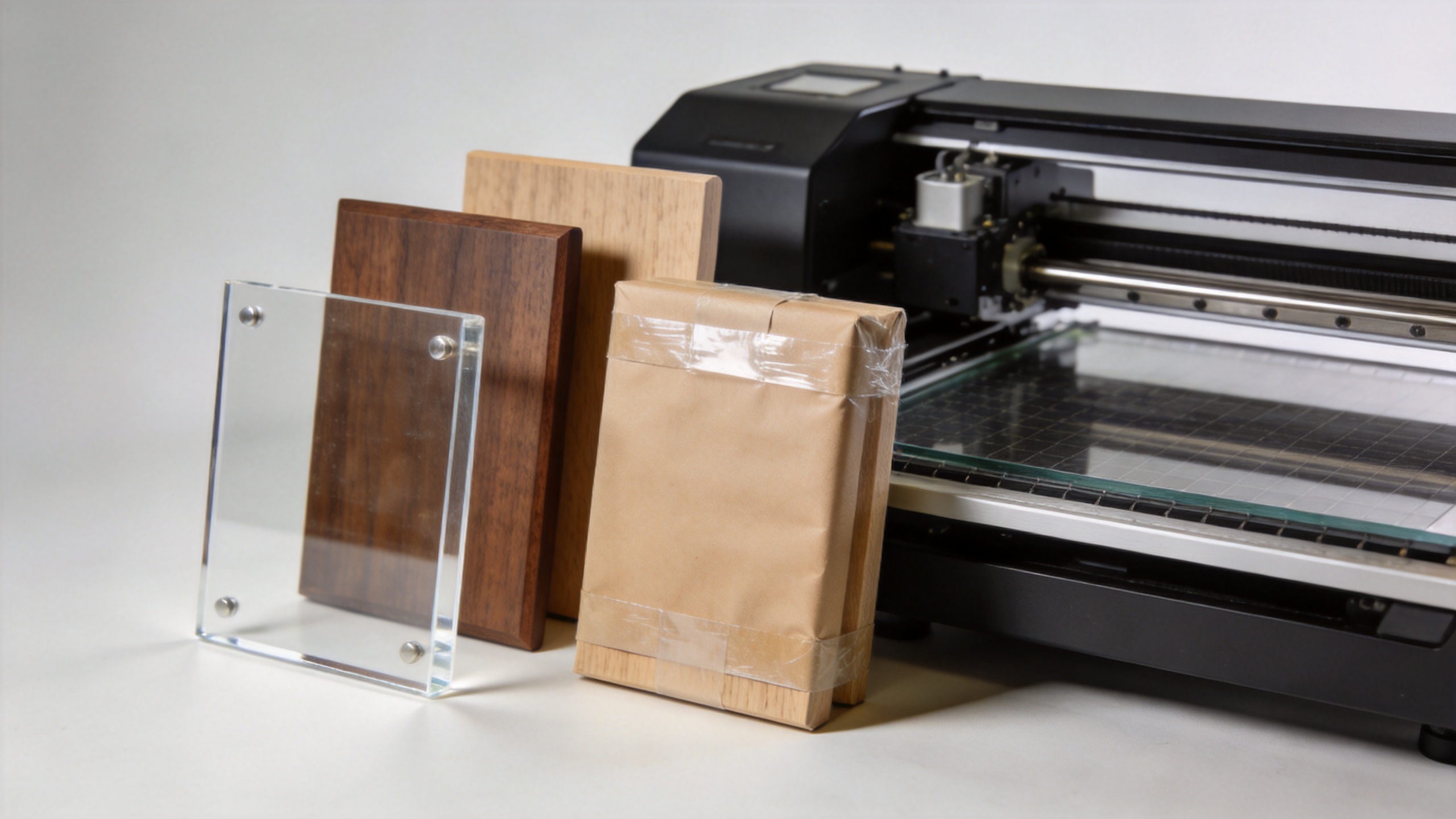
A quotation becomes more useful when it is paired with a sample plan. Send actual offcuts whenever possible: the acrylic grade, the wood species or board type, the coating, and the finish you intend to sell. A screen proof cannot answer adhesion, edge sharpness, white-ink coverage, or the visual effect of printing on a dark or transparent surface.
For acrylic, specify whether you need a white underbase, a color-white-color effect, back printing, or a textured finish. For wood, say whether the surface is sealed and sanded. Grain, porosity, and coatings can change the result, so ask the supplier to define the test conditions and show the sample outcome rather than making a broad compatibility claim.
It is a small thing, but sample approval should include handling after curing. Ask how the print will be checked for rub resistance, edge behavior, and appearance after normal cleaning for the intended application. The most useful sample is a repeatable reference piece, not simply the most impressive one-off demo.
Turn Artwork Requirements Into Print Specifications
Attach representative production files, especially designs with fine text, gradients, solid-color areas, white layers, and photographic elements. A uv printer for acrylic may need a different layer strategy from a wood project because the background and surface absorbency are different. Explain whether visual consistency across reorders matters, whether brand colors are critical, and whether the design must align to pre-cut holes or edges.
Ask the supplier to explain how the proposed workflow handles RIP preparation, white ink, spot varnish if relevant, and multi-layer registration. Do not treat the highest advertised resolution as the answer to every quality question. For acrylic and wood, the material, ink layering, artwork, and operator setup all influence the finished piece.
Ask for a Configuration Breakdown, Not a Single Price
A quote for a uv flat bed printer should separate the equipment configuration from optional items and ongoing requirements. This makes competing offers easier to compare and prevents an apparently low price from hiding missing workflow essentials.
| Quote item | What to request | Why it matters |
|---|---|---|
| Table and clearance | Printable area, usable area, and maximum object height | Confirms that acrylic sheets and wood pieces fit with fixtures in place. |
| Ink configuration | Color, white, varnish options, and maintenance expectations | Determines how transparent acrylic, dark substrates, and effect layers are approached. |
| Workflow | RIP software, file-preparation support, and training scope | Connects your artwork files to a repeatable production process. |
| Site readiness | Machine footprint, power requirements, ventilation guidance, and delivery access | Reduces installation delays after the machine arrives. |
| Service scope | Commissioning, remote support, spare-parts process, and warranty terms | Helps buyers assess downtime risk as well as purchase price. |
If your priority is short runs of many different products, changeover and fixture workflow deserve attention first. If you are producing repeat acrylic panels, table size and repeatable positioning may matter more. Both are valid needs; the right configuration depends on the work you actually plan to run.
Evaluate a UV Wood Printer With the Surface in Mind
When you compare a uv wood printer, avoid assuming that one successful sample applies to every board. Raw wood, sealed wood, veneer, MDF, and coated decorative panels may behave differently. Put the exact substrate in the quote request and ask the supplier to state any preparation steps, recommended handling, and limits that apply to the tested sample.
Wood projects also benefit from a conversation about visual intent. Do you want opaque color that hides the grain, a lighter design that lets the grain show through, or a raised effect? Those choices affect artwork preparation and ink use. A balanced supplier discussion should identify the trade-off instead of promising the same finish across every wood surface.
Compare the Delivered Scope and Supplier Support
For overseas equipment purchases, the machine price is only one part of the decision. Ask for the delivered scope in writing: packing, shipping terms, installation assistance, training, included software, starter consumables, and the process for technical questions after delivery. Buyers should also ask how sample files, color profiles, and maintenance guidance will be documented for the operating team.
Sunika provides pre-purchase technical consultation to help buyers match a printer configuration to production requirements. If you want to review a relevant option, see the 6090 9060 UV FLATBED PRINTER product page, then send the project checklist with your material and size details. A product page is a starting point; the final recommendation should still be based on confirmed samples and job requirements.
Copy-and-Send Quote Request Checklist
- Company, market, and intended application.
- Material list: acrylic type, wood type, coating, thickness, and surface finish.
- Maximum and typical job sizes, plus object height.
- Expected quantity per job, weekly volume, and peak-period needs.
- Artwork files showing fine detail, white ink, color-critical, and textured-effect requirements.
- Sample-testing request and the acceptance criteria for each material.
- Required table size, print clearance, workflow software, and training.
- Installation-site details: available space, power, ventilation, and delivery access.
- Full quotation breakdown, service scope, spare-parts process, and warranty terms.
A complete brief helps a supplier propose an actionable solution instead of a generic price. For acrylic and wood projects, that is the practical difference between buying a uv flat bed printer and building a workflow that can produce the work you plan to sell.













