EN


Small UV Printer vs Larger Flatbed Systems: How to Choose
A small UV printer can be a sensible starting point, but only when its working envelope and daily rhythm match the jobs you intend to sell. The more useful question is not “small or large?” It is whether the machine lets your team finish today’s mix of work without creating unnecessary handling, queueing, or floor-space pressure tomorrow.
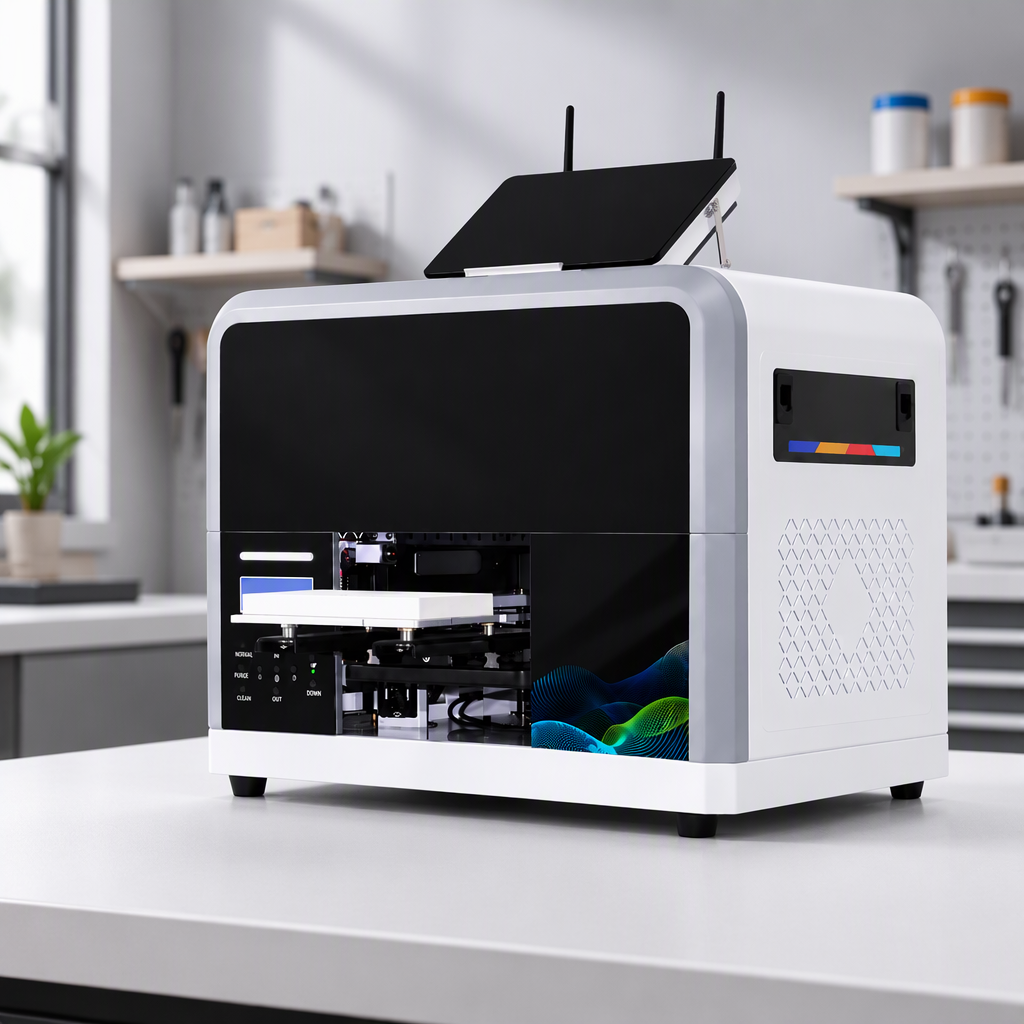
For distributors, print shops, and new UV decoration businesses, a small UV printer is usually evaluated alongside a larger flatbed system because both can decorate rigid materials. The difference is how each one fits product dimensions, batch volume, loading routines, and the room around the machine. This guide uses that decision lens rather than treating bed size as a simple specification race.
Start with the products you will print—not the machine footprint
List the products you expect to run in the next six to twelve months: promotional items, small panels, phone cases, packaging samples, acrylic pieces, wood, glass, signage, or irregular objects. A small UV printer is often a sound fit when most items are compact and can be placed repeatedly with simple fixtures. If your standard jobs already include wide boards, multiple panels, or oversized signage, a larger flatbed may prevent constant workarounds.
Measure the largest practical item, then measure the common job. Buyers sometimes choose around an occasional maximum-size order and pay for unused capacity every day. Others choose a small UV printer for a growing product range and later find that dividing one order into several setups adds more delay than expected. Include item thickness, not only length and width, because clearance and loading access matter for rigid substrates.
Compare throughput as a workflow, not a headline speed
A larger bed can allow several items to be printed in a single run. That can reduce repeated setup and support batch production, especially when orders contain similar pieces. But larger capacity does not automatically mean better output for every shop. A small UV printer may turn short runs quickly when operators can load it easily, prepare files efficiently, and avoid waiting for enough work to fill a large table.
Build a one-week job sample and ask three questions: How many setups does it require? How often must the operator reload or reposition media? Where does finished work wait for inspection or packing? This exercise often changes the decision. The purchase price may look like the main issue, yet the daily number to manage is cost per completed job: labor, ink, rejected pieces, setup time, and delivery reliability.
Choose the bed size that matches your batch pattern
| Buying situation | Often the better fit | Why |
|---|---|---|
| Personalization, samples, compact objects, short runs | Small UV printer | Lower space commitment and straightforward loading can suit frequent changeovers. |
| Repeated batches of small items | Either, based on fixture layout | A larger bed can batch more parts; a small UV printer can still be efficient when batches are modest. |
| Wide boards, panels, signage, or larger-format work | Larger flatbed system | The job should fit without splitting artwork or repeated repositioning. |
| Rapidly expanding order volume | Larger flatbed system or staged investment | Evaluate future capacity against actual sales forecasts and available labor. |
The table is a starting point, not a rule. If your volume is highly variable, a small UV printer may be the better first asset while you validate demand. If stable batch orders are already forcing multiple setups per day, the larger system can make operational sense sooner.
Check the space around the printer, not only the dimensions on the quotation
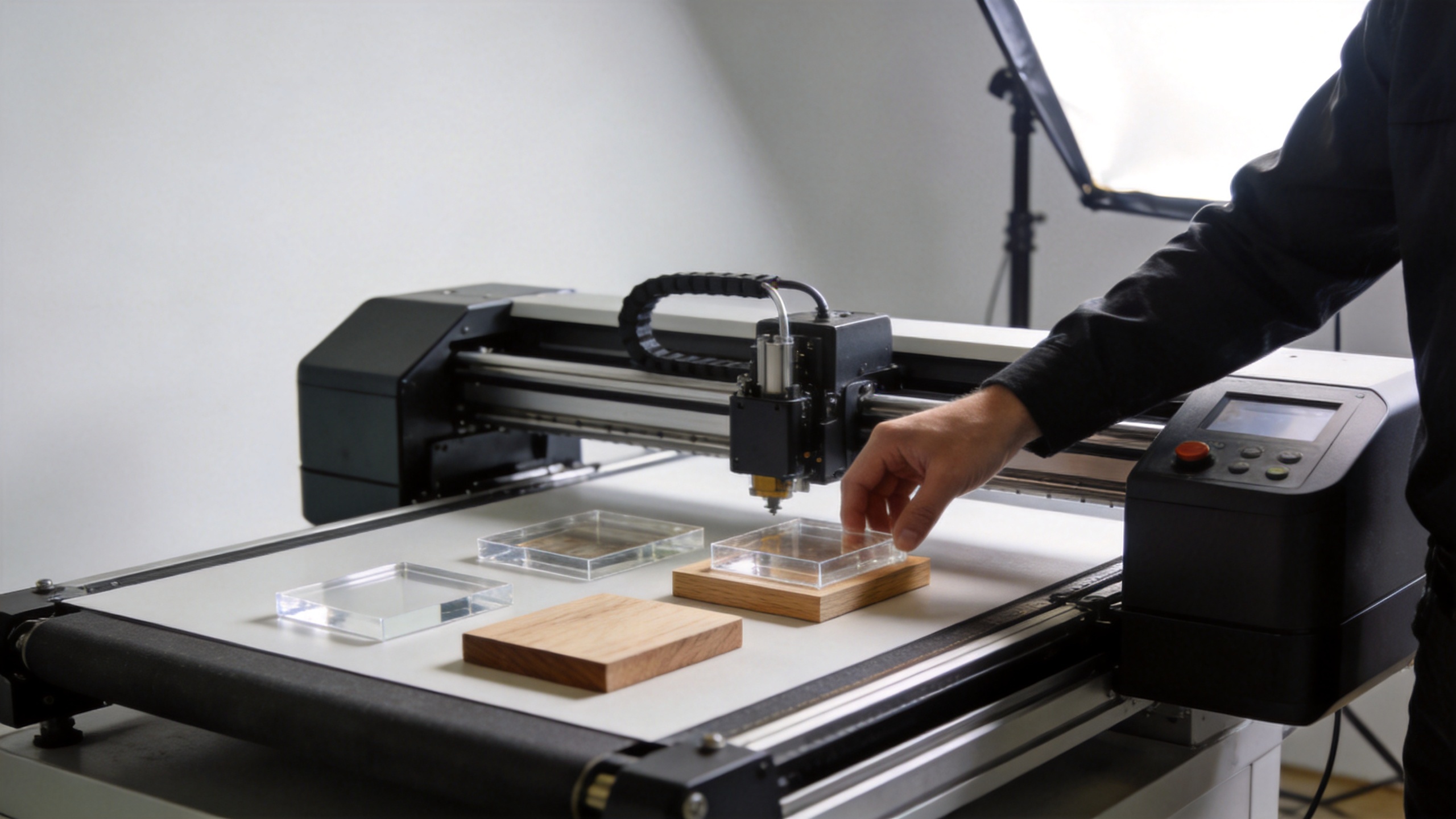
Floor space is a production factor. A small UV printer needs room for safe loading, maintenance access, ink handling, finished parts, and operator movement. A larger flatbed needs all of that plus a workable path for boards and material carts. Before purchasing, mark the proposed footprint on the floor and simulate how a substrate enters, prints, exits, and moves to the next station.
Also consider ventilation requirements, electrical supply, surface preparation, cleaning routines, and who will handle heavier media. A system that technically fits a room can still create bottlenecks if the operator must repeatedly move stock around other equipment. This is why equipment size should be discussed with the production team, not decided from a product brochure alone.
Use a total-cost comparison that includes growth risk
A small UV printer generally asks for a lower initial commitment, which can reduce risk for a first-time buyer or a shop testing a new application. The trade-off is possible capacity pressure if order size grows faster than expected. A larger flatbed can create room for broader product dimensions and batching, but it may bring a higher initial outlay, larger facility demands, and a need for steadier utilization.
Instead of choosing by price alone, compare three realistic scenarios: current order volume, expected volume after one growth cycle, and a slow month. Estimate the labor steps for each. The right system is the one that remains workable across those scenarios without forcing your team to chase a theoretical maximum output.
Make the decision with a practical checklist
- What are the dimensions and thicknesses of your most common sellable products?
- How many identical items must be printed in a typical batch?
- Will a small UV printer require repeated repositioning for your core jobs?
- Do you have clear loading, unloading, maintenance, and material-storage space?
- Which application is proven today, and which is only a forecast?
- Can your operators support the handling needs of a larger flatbed system?
If you need a reference point for a compact-to-mid-size flatbed option, review the 6090 9060 UV FLATBED PRINTER alongside your own product dimensions and workflow plan. Treat the product page as a discussion starting point, then confirm the final configuration with the supplier.
Final recommendation
Choose a small UV printer when your business is centered on compact substrates, changing short runs, limited space, and a measured path into UV production. Choose a larger flatbed system when product size, repeated batches, or established volume show that the additional bed area will be used consistently. In either case, the most reliable selection comes from mapping real jobs, operator movement, and growth assumptions before comparing specifications.