EN


Meet the SUNIKA A5 UV Flatbed Printer: Compact Printing for Personalized Products
2026/11/19
DTF printing is widely used for custom T-shirts, hoodies, tote bags, and other fabric products. However, one problem can frustrate both beginners and experienced print shop owners: a design that looks perfect after pressing but starts peeling or cracking after washing.
Why does this happen? In most cases, the problem is related to transfer adhesion, curing, heat-press settings, or fabric compatibility.
In this guide, we'll look at the common causes of DTF transfer peeling and cracking and explain how to prevent them.
DTF transfer problems can appear in several ways after washing:
Peeling: The edges or entire sections of the design lift away from the fabric.
Cracking: Small cracks appear across the printed design, especially in areas that stretch frequently.
Fading: The printed colors become less vibrant after repeated washing.
Partial detachment: Some parts of the design remain attached while others come off.
These problems may have different causes. Identifying the type of damage can help you find the right solution instead of changing every production setting at once.
Peeling usually indicates that the transfer has not bonded properly to the fabric. Here are some factors worth checking.
Temperature, pressure, and pressing time all affect how well the adhesive bonds to the fabric.
If the temperature is too low or the pressing time is too short, the adhesive may not activate properly. Insufficient pressure can also result in uneven contact between the transfer and the garment.
On the other hand, excessive heat may damage certain fabrics or affect the transfer finish.
How to prevent it: Follow the recommended settings provided by your film and powder suppliers. Make sure the heat press applies even pressure across the design, and test the settings on a sample garment before production.
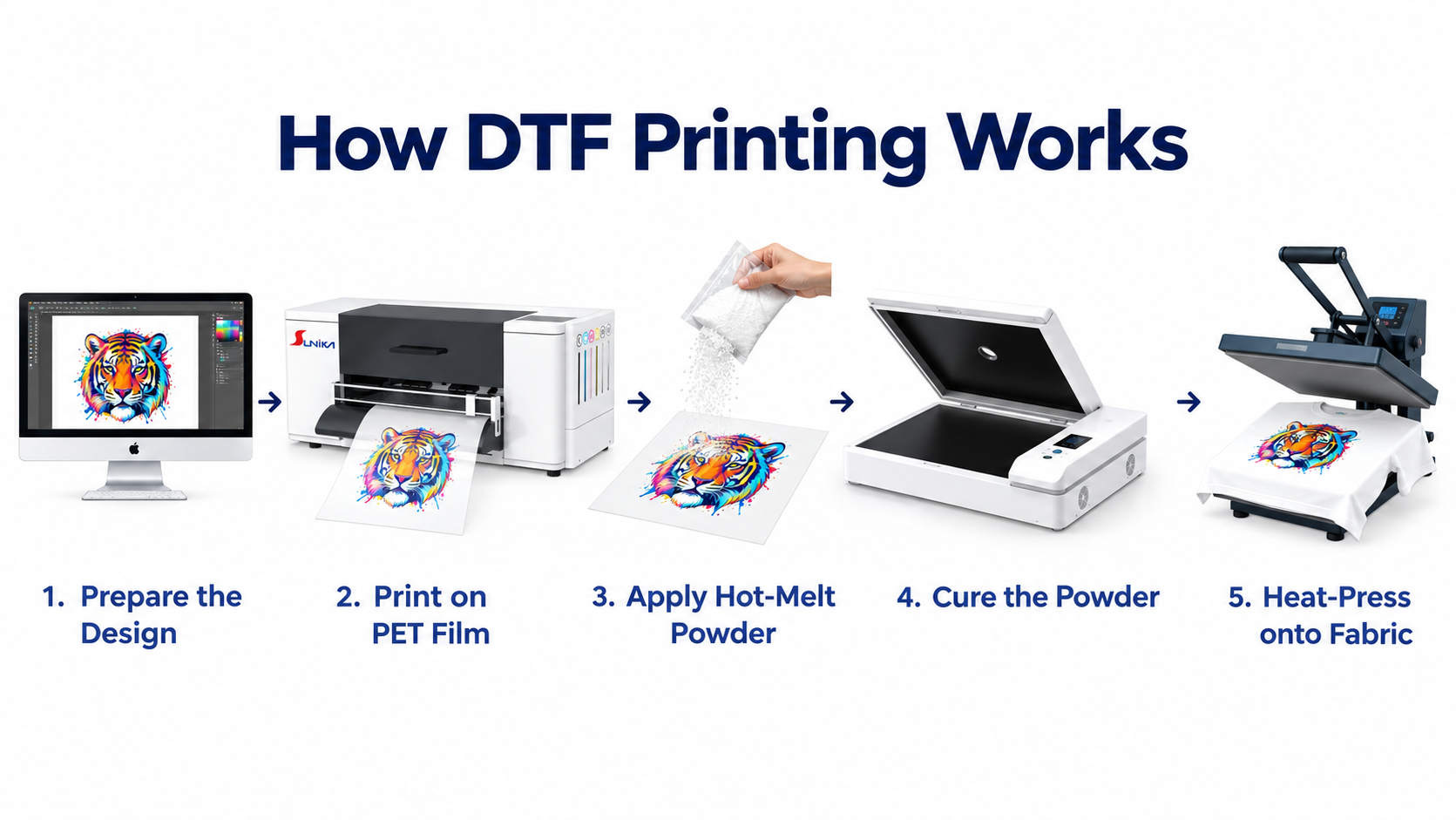
Hot-melt adhesive powder is responsible for bonding the printed design to the fabric. If the powder is not cured properly, the transfer may not adhere as expected.
Uneven heating or incorrect curing conditions can leave parts of the adhesive under-processed.
How to prevent it: Check the curing temperature and time recommended by the powder supplier. Make sure the powder melts evenly across the printed area. Avoid relying on appearance alone; perform a transfer and wash test to check the result.
Not every fabric behaves the same way during heat transfer. Cotton, polyester, blends, and performance fabrics can respond differently to heat and adhesive.
Some materials have surface treatments or coatings that may interfere with adhesion. Heat-sensitive fabrics may also be damaged by unsuitable pressing conditions.
How to prevent it: Check the fabric manufacturer's recommendations and test the complete transfer process on the actual material. Do not assume that settings that work on cotton will also work on polyester or other fabrics.
DTF films come in different types, including hot peel and cold peel. Removing the film at the wrong time may affect the transfer result.
For example, peeling a cold peel film while it is still hot may cause parts of the design to lift. A hot peel film should also be removed according to its specified peeling instructions.
How to prevent it: Identify the film type before pressing and follow the manufacturer's peeling instructions. Peel smoothly and avoid pulling the film sharply.
Unlike peeling, cracking is often related to the flexibility of the transfer and the way it interacts with the fabric.
A transfer with too much ink or adhesive may feel thick and stiff. When the garment stretches or moves during wear and washing, the printed layer may not flex well with the fabric.
How to prevent it: Use appropriate print settings and avoid excessive ink or powder application. Make sure the design has a suitable balance between coverage and flexibility.
Some garments stretch significantly during use. If the transfer does not move well with the fabric, repeated stretching can contribute to cracking.
This is especially important for sportswear, fitted clothing, and stretchy materials.
How to prevent it: Choose compatible transfer materials and test them on the intended fabric. For garments that stretch frequently, check the transfer's flexibility before starting production.
Cracking can also result from inconsistent printing, curing, or pressing. If the transfer layer is not properly formed or bonded, it may become more vulnerable to wear.
How to prevent it: Check the entire production process, from printing and powder application to curing and heat pressing. Use compatible consumables and maintain consistent working conditions.
Good transfer durability starts before the garment reaches the customer. A consistent production process helps reduce common problems.
Use compatible materials. Make sure the ink, PET film, adhesive powder, and fabric are suitable for the same transfer process.
Control curing conditions. Follow the powder supplier's recommended temperature and time. Ensure the adhesive melts evenly.
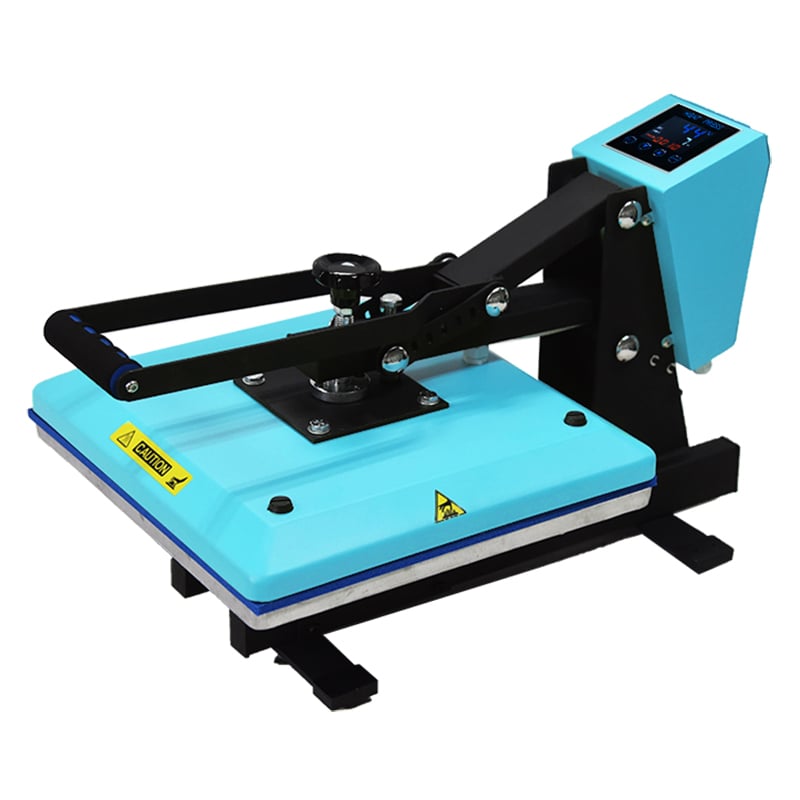
Apply consistent heat and pressure. Check that the heat press is working correctly and that the garment is positioned evenly.
Follow the correct peeling instructions. Hot peel and cold peel films have different requirements. Do not use the same peeling method for every film.
Perform sample tests. Before producing a large order, test the transfer on the actual garment material. Check adhesion, flexibility, and appearance.
Give customers proper washing instructions. Recommend turning garments inside out, washing with suitable settings, and avoiding excessive heat during drying. Always follow the garment and transfer suppliers' care recommendations.
A simple wash test can help identify potential problems before delivering an order.
Start by applying the transfer to a sample garment using the recommended production settings. Allow it to rest according to the transfer supplier's instructions before washing.
Then:
Inspect the design before washing and take a photo for comparison.
Wash the garment according to the recommended care instructions.
Check for lifted edges, cracks, fading, or changes in the surface.
Repeat the test if you need to evaluate performance over multiple wash cycles.
For more consistent results, keep records of the film type, powder, fabric, curing conditions, and heat-press settings used in each test.
There is no single wash-test result that applies to every DTF material combination. The required durability standard depends on the garment, its intended use, and the customer's expectations.
A few production habits can increase the risk of transfer problems:
Guessing heat-press settings: Always start with the supplier's recommended settings instead of relying on guesswork.
Using incompatible consumables: Different films, inks, and powders are not necessarily interchangeable.
Skipping sample tests: A transfer that looks good immediately after pressing may still fail after washing.
Peeling at the wrong time: Check whether the film requires hot or cold peeling.
Ignoring garment care: Excessive washing temperatures and harsh drying conditions may shorten the life of a transfer.
Paying attention to these details can help improve consistency and reduce wasted materials.
This may be caused by insufficient adhesive bonding, incorrect heat-press settings, incomplete powder curing, or fabric incompatibility. Check the entire process and test a sample using the supplier's recommended settings.
There is no universal number. Durability depends on the ink, film, adhesive powder, fabric, pressing conditions, and washing method. Follow the supplier's testing standards and evaluate the complete transfer combination.
Yes. Repeated stretching can put stress on the transfer layer. Choose materials designed for the intended fabric and test flexibility before production.
A finishing press may improve the surface finish or adhesion in some transfer systems, but it is not a guaranteed fix for poor curing or incorrect initial pressing. Follow the film and powder supplier's instructions.
DTF transfer peeling and cracking are often signs that something in the production process needs attention. Incorrect heat-press settings, incomplete curing, unsuitable materials, and improper peeling can all affect the final result.
Instead of changing settings randomly, check each production step and test one variable at a time. With compatible materials, controlled processing, and proper garment care, you can produce more consistent DTF transfers that hold up better during everyday use.