EN


How to Compare DTF Printer Sizes for Different Order Volumes
Choosing a DTF printer by width alone is a shortcut that often creates a mismatch later. A small DTF printer can be a practical production tool for a focused shop, while a wider platform can support a more continuous transfer workflow. The useful question is not simply whether 330 mm or 600 mm is better. It is whether the equipment can handle your normal order mix, your peak weeks, your available floor space, and the work that happens after printing.
For apparel decorators, distributors, and growing print studios, this comparison framework turns printer size into an operational decision. It also avoids a common mistake: buying an industrial DTF printer for occasional large jobs, or keeping a compact unit after order patterns have clearly outgrown its production rhythm.
Start with the order pattern, not a daily output promise
List the orders you actually receive over a representative four-week period. Separate one-off samples, small custom batches, repeat club or workwear orders, and deadline-driven peaks. Then note the artwork format: a few individual chest logos behave differently from wide gang sheets containing many small designs.
A small DTF printer is often easier to justify when work arrives in short, varied runs and the operator needs fast changes between artwork files. A wider system becomes more relevant when the same operator repeatedly prepares long runs of gang sheets, when multiple orders compete for the same production window, or when transfers must be ready for a scheduled pickup. Do not treat printer width as a fixed promise of finished garments per day. Print mode, artwork coverage, film handling, powder application, curing, and operator availability all affect the finished-transfer pace.
Compare usable film width and layout efficiency
An A3-class DTF format generally provides about 330 mm of usable print width, while a 600 mm platform is commonly described as a 24-inch class system. That difference affects how many logos, sleeve graphics, or related designs can sit across one film row. It does not automatically mean every job needs the larger platform.
Use three recent orders as a practical test. Lay out each order as you would normally gang it, then compare waste, number of print rows, and file-preparation effort at both widths. If the 330 mm layout remains efficient and film changes do not interrupt other work, the small DTF printer may match the business well. If jobs repeatedly require more passes, repeated trimming, or delayed artwork because the layout is constrained, the wider format may remove a real bottleneck.
Match the printer to the whole production rhythm
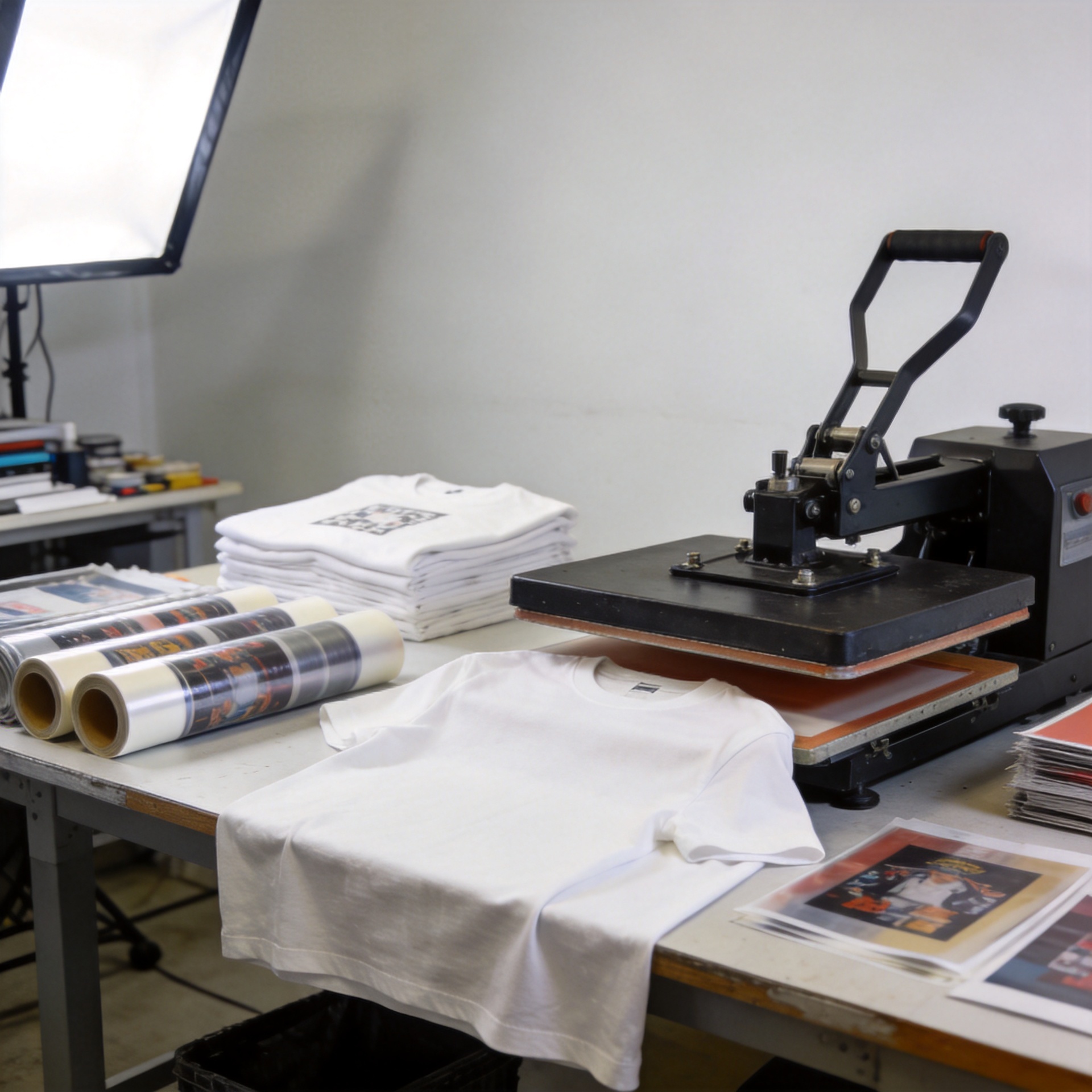
Printing is only one stage in DTF transfer production. Film must be loaded, printed, powdered, cured, collected, checked, and sometimes sorted by customer or garment size. A wider printer can increase the volume reaching each downstream step. Before moving to an industrial DTF printer, make sure the powder and curing process, material staging area, and finishing routine can keep pace.
This is especially important in a compact workshop. A smaller machine may allow clearer movement between the printer, shaker or curing equipment, packing table, and heat press. A larger platform can make sense when the workspace has room for film rolls, maintenance access, finished-transfer staging, and a predictable queue of work. Measure the working envelope, not only the printer footprint: roll changes, maintenance panels, ventilation needs, and operator access all matter.

A practical comparison by order-volume stage
| Order pattern | What to examine | Likely fit |
|---|---|---|
| Samples, personalized pieces, and intermittent small batches | Fast artwork changes, simple workflow, limited floor space | A small DTF printer can be a sensible starting point when utilization is uneven. |
| Frequent mixed orders with recurring gang sheets | Film-layout efficiency, queue time, operator handoffs | Compare both widths using actual order files before deciding. |
| Repeat production runs and regular deadline peaks | Rows per job, downstream capacity, peak-week backlog | A 600 mm platform may be worth evaluating if the whole line can support it. |
The middle stage deserves the most discipline. It is easy to choose based on a single unusually busy week or a single large client. Instead, calculate how often the constraint appears. A recurring bottleneck is a purchasing signal; an occasional spike may be better handled through scheduling, outsourcing, or a revised gang-sheet process.
Use upgrade signals instead of assumptions
Track a few indicators for one month: how often orders wait for print time, how many jobs are split into extra layouts, how often film changes interrupt a run, and how many rush jobs force overtime. Add a note for downstream delays. If printing is not the limiting step, a larger machine may simply move the queue to curing or packing.
When the evidence points to width as the constraint, compare current equipment with confirmed product information rather than relying on generic labels. For example, the Sunika SK-A3 DTF Printer F1080 330mm A3 Direct to Film Printer represents a compact-format option to review for smaller layouts. For wider-format evaluation, review the Sunika SK60 DTF Printer Dual I3200 600mm Tee Shirt Printer alongside your available space and downstream process. Product titles and live specifications should be checked with the supplier before purchase.
Build a decision checklist before you buy
- Use real order files from normal and peak weeks.
- Compare film utilization, not only headline width.
- Map printing, powder, curing, sorting, and packing as one workflow.
- Confirm floor space, maintenance access, power, and ventilation requirements.
- Ask whether your bottleneck is width, operator time, or a downstream step.
- Choose capacity that fits recurring demand, with a realistic path for growth.
Make printer width serve the business
The right small DTF printer is the one that keeps your usual orders moving without creating unnecessary cost or complexity. The right industrial DTF printer is the one that improves a proven, recurring production constraint across the full workflow. By comparing real layouts, order cadence, and workspace readiness, a print business can choose a width that supports today’s customers while making the next upgrade easier to recognize.
Questions to ask during a width comparison
Is a small DTF printer enough for a growing shop?
A small DTF printer can be enough when orders are varied, work is scheduled in short runs, and the operator can prepare gang sheets without a growing queue. Review the small DTF printer against the busiest recurring week rather than a single quiet day. If a small DTF printer keeps layout waste, overtime, and handoffs under control, wider capacity may not be the next priority.
When does an industrial DTF printer become practical?
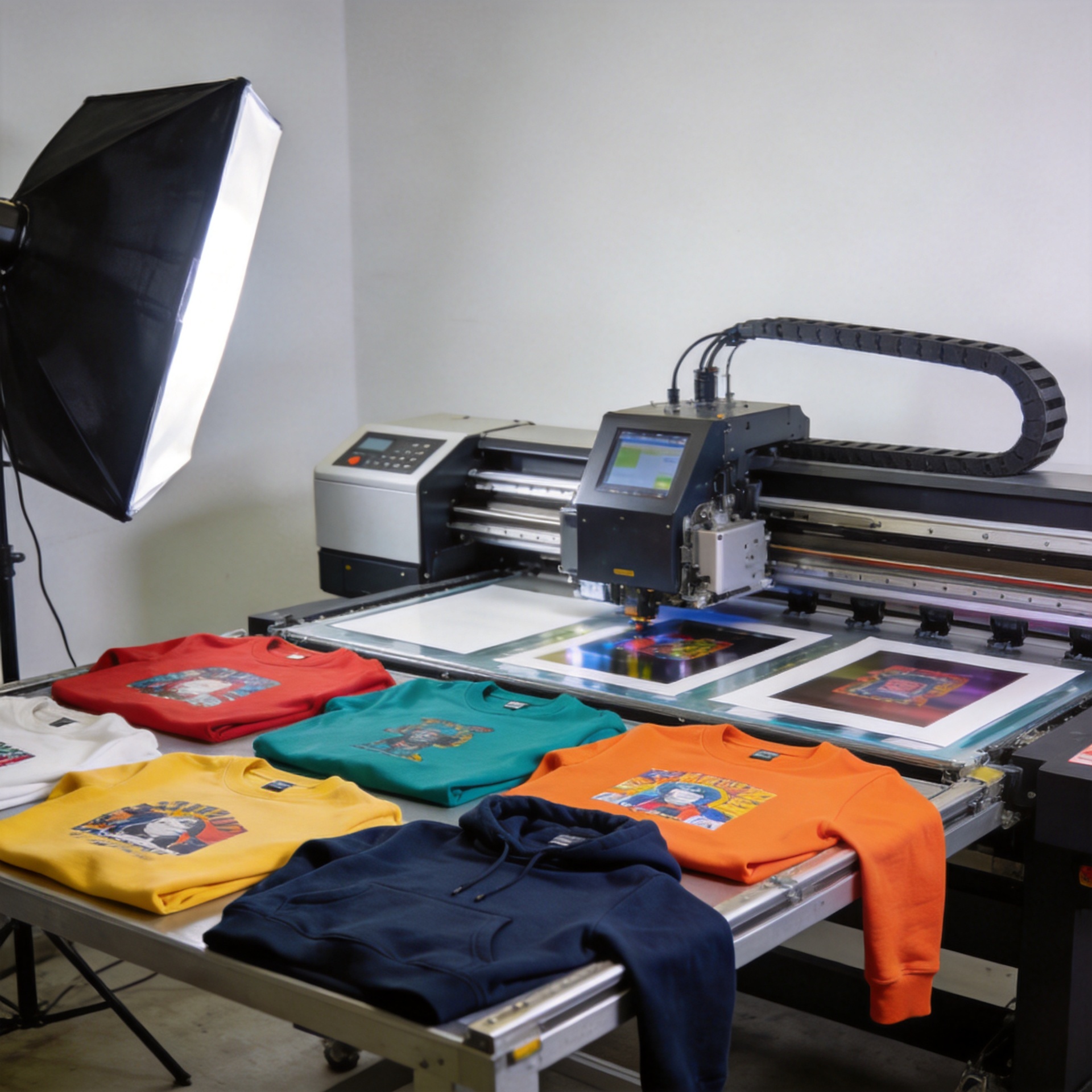
An industrial DTF printer becomes practical when the width constraint appears repeatedly across profitable orders and the downstream line is ready. Before choosing an industrial DTF printer, verify film storage, powder handling, curing capacity, and packing space. An industrial DTF printer should improve the complete transfer workflow, not only increase the width of one print row.
Should I compare a small DTF printer and an industrial DTF printer with the same files?
Yes. Run the same mix of logo sheets, chest prints, and repeat orders through both layouts. This makes the small DTF printer versus industrial DTF printer decision easier to explain because it reveals film use, setup time, and queue pressure. A small DTF printer may win on flexibility; an industrial DTF printer may win when repeated layouts fill the wider film efficiently.
Finally, document the decision after a month of production. If the small DTF printer still meets delivery targets, keep optimizing the process around it. If the industrial DTF printer case is supported by recurring order data and a ready downstream workflow, move forward with a supplier discussion based on your actual jobs.