 EN
EN


How to Request a DTF Printer Quote: Specifications to Prepare
Requesting a DTF transfer printer quote should be more than asking for a price and a photo. A useful quotation lets you compare like with like: the same expected workload, print width, workflow equipment, delivery destination, and support scope. Without those inputs, two offers may look similar while covering very different systems.
As a DTF equipment specialist, the most practical starting point is your actual workflow. A lower initial price can be the right choice for a small operation, but not if the proposed DTF transfer printer cannot handle the jobs, materials, or service expectations you already have. The checklist below gives suppliers the details needed to prepare a quote you can evaluate fairly.
Start with the jobs you need the DTF transfer printer to handle
Describe what you print now and what you expect to print over the next 6–12 months. Suppliers do not need a precise forecast, but they do need enough context to recommend an appropriate configuration instead of simply sending their most common model.
- Order pattern: one-off personalized orders, regular small batches, gang sheets, or steady production runs.
- Typical and peak volume: state transfers, sheets, or metres per day/week, and identify seasonal spikes.
- Design profile: simple logos, photographic artwork, fine lines, large chest prints, sleeve prints, or mixed designs.
- Garments and materials: cotton, polyester, blends, nylon, dark garments, stretch fabrics, or other target substrates.
- Quality priorities: color consistency, white opacity, fine detail, soft hand feel, wash-performance validation, or fast turnaround.
These details affect the right DTF transfer printer more than a generic “high speed” request. For example, a buyer focused on short-run custom apparel may value changeover flexibility and easy maintenance. A transfer supplier producing repeated gang sheets may put more weight on printable width, stable media handling, and workflow continuity.
Specify format, printable width, and the production target
“A3” or “industrial” is not enough for a comparable quote. State the print width you need, whether you prefer sheet or roll media, and the working format you expect to run. Commercial DTF listings commonly distinguish desktop, wider roll-feed, and industrial formats, so this one line can quickly narrow the discussion.
Ask each supplier to state the proposed machine’s printable width, recommended media width, configuration, and output basis. Do not compare a peak-rate speed claim from one offer with a production-quality setting from another. Instead, request a description of the print mode used for the quoted output, the design coverage assumed, and whether the figure refers to printing alone or the full transfer workflow.
One trade-off is worth making explicit: a wider DTF transfer printer may improve batch capacity, but it also changes the footprint, media handling, consumables, and operator routine. If your orders are mostly small and irregular, a larger format is not automatically more productive. Ask the supplier to explain why the quoted width fits your average order rather than only your future ambition.
List the configuration questions that affect day-to-day reliability
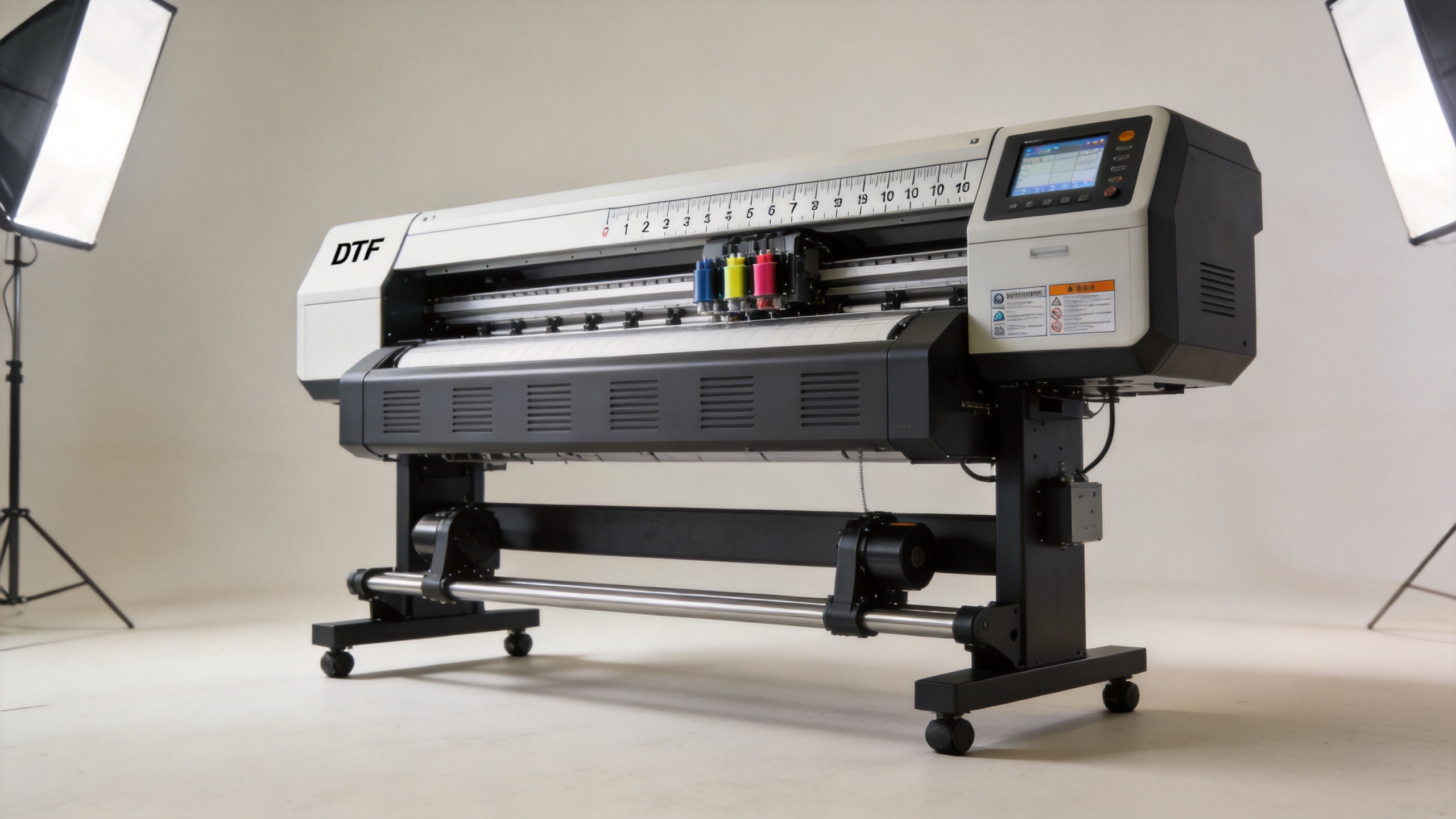
A quote should identify the components that shape operation, not just a headline model name. In particular, ask suppliers to list the printhead configuration, ink system, white-ink circulation or agitation approach, cleaning and maintenance functions, RIP software, and included computer or control setup where applicable.
White ink deserves a direct question because it is central to dark-garment output and requires routine management in DTF production. Ask what daily, weekly, and shutdown maintenance the supplier recommends; what is included in training; and which consumables are specified for the quoted DTF transfer printer. This is not about a marketing promise. It is about comparing the maintenance responsibility you will actually inherit.
The purchase price can feel like the main decision until you track ink, film, powder, cleaning supplies, spare parts, and downtime risk. Ask for consumable compatibility and ongoing supply options in writing. If you will source locally, ask which specifications must be matched before using alternatives. A cheaper consumable can be attractive on the invoice, but compatibility and process consistency should be evaluated across the whole workflow.
State whether you need a complete DTF line or printer-only pricing
Many incomplete quotations arise because the buyer and supplier mean different things by “DTF printer.” Clarify whether you are requesting printer-only pricing or a production package. A complete package may involve film feeding, powder application and curing equipment, a heat press, RIP software, start-up consumables, ventilation considerations, and training. The appropriate scope depends on what you already own and how you plan to operate.
| Quote item | What to tell the supplier | Why it matters |
|---|---|---|
| Printer scope | Printer only or complete line | Avoids comparing an incomplete offer with a turnkey package. |
| Post-print workflow | Existing shaker, oven, or heat press; or equipment needed | Defines responsibility for curing and transfer application. |
| Software | Current operating system and preferred workflow | Helps confirm RIP and driver compatibility. |
| Consumables | Whether ink, film, and powder should be included | Makes start-up cost and supply planning visible. |
Prepare your site, power, and destination details
For an imported DTF transfer printer, the destination is part of the technical brief. Provide your country, city or port, postal code where relevant, and whether you want EXW, FOB, CIF, DDP, or another commercial basis discussed. Suppliers can then quote freight and packing more accurately rather than leaving a large logistics gap after the machine price.
Also share your local voltage, frequency, plug preference, available electrical capacity, workspace dimensions, and any access limitations such as stairs, narrow doors, or loading constraints. Some larger DTF configurations may have different power requirements, so ask the supplier to confirm the exact requirement for the quoted setup and what installation preparation is needed. If you operate in a humid, hot, or cold environment, mention that too; consumables and media handling benefit from a stable working environment.
Ask for commercial and service details in the same quotation
A decision-stage quote should make the commercial relationship as clear as the machine configuration. Request the lead time, payment milestones, packaging details, warranty scope, excluded items, remote support channels, training format, spare-parts availability, and response process for technical questions. Dealers should also ask about documentation, onboarding support, and the service arrangement that will apply to downstream customers.
For buyers considering an A3 configuration, you can review the product information for the Sunika SK-A3 DTF Printer F1080 330mm A3 Direct to Film Printer as one reference point for discussing format. Treat any product page as the start of a configuration conversation, then ask the supplier to confirm the exact scope and specification included in your quotation.
Use this copy-and-send DTF transfer printer quotation brief
- Business type and market: decorator, transfer supplier, dealer, or distributor; destination country.
- Target workload: typical and peak weekly volume, order types, and expected growth.
- Required format: target printable width, sheet or roll workflow, and space available.
- Applications: garment types, fabric mix, dark or stretch materials, and quality priorities.
- Requested configuration: printer-only or complete line; RIP, consumables, curing, and heat-press requirements.
- Site details: voltage, frequency, electrical capacity, workspace, and installation constraints.
- Commercial request: destination, preferred trade term, lead time, warranty, training, and support requirements.
With this brief, suppliers can recommend a DTF transfer printer configuration against the same criteria. The result is not merely a faster price response; it is a quotation you can audit for scope, operating fit, and long-term support before you commit.













