EN
EN

How to Choose the Right Heat Press Machine for DTF Transfers
As a DTF printing equipment specialist with hands-on experience across clamshell and swing-arm configurations, I can tell you that the key to choosing the right heat press for DTF transfers isn't just the spec sheet—it's whether the machine matches your actual workflow.
The heat press is the final, and often most overlooked, variable in the DTF process. A quality DTF printer produces sharp, vibrant transfers on film. But if your heat press delivers uneven temperature, inconsistent pressure, or incorrect timing, even a high-quality DTF print won't bond cleanly to the fabric. Getting this pairing right protects your print investment and determines the durability of every transfer you produce.
DTF Heat Press Settings: Temperature, Pressure, and Time
I expected getting the temperature dialed in to be straightforward, but the reality is that consistent results across different fabric weights require calibration and test runs—and that takes time, not just good hardware. Here are the baseline settings that work reliably for most DTF applications:
| Substrate Type | Temperature | Press Time | Pressure |
|---|---|---|---|
| Cotton / Cotton-Blend | 310–325°F (155–163°C) | 12–15 seconds | Medium to High |
| Polyester / Performance Fabric | 290–305°F (143–151°C) | 12–15 seconds | Medium |
| Heavy Garments (Hoodies, Canvas Bags) | 310–325°F (155–163°C) | 15–20 seconds | Medium to High |
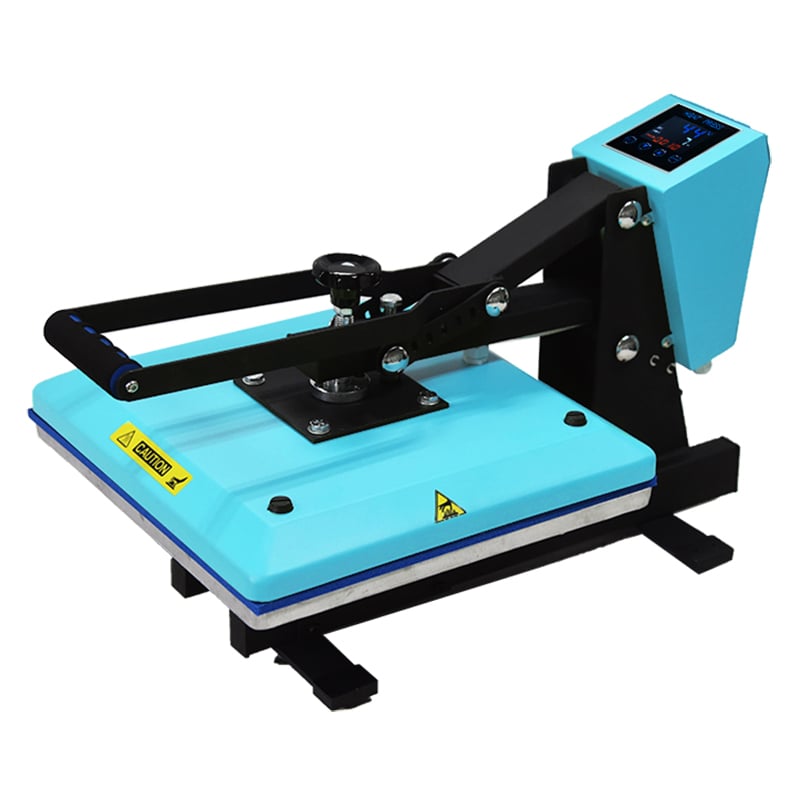
On pressure: if the press closes easily with one hand, you need more resistance. The platen should meet slight but firm pushback when you close it. Too little pressure leads to incomplete adhesion and lifting edges; too much can leave a deep impression or distort lightweight garments.
After pressing, use the cold peel method consistently for DTF transfers—let the transfer cool before removing the film. Peeling while hot causes the transfer to stretch or lift. When applied with correct settings, a properly bonded DTF transfer holds up for up to 100 wash cycles without fading, cracking, or peeling.
Flat (Clamshell) vs. Swing-Away Heat Press: Which Works Better for DTF?
In my experience, the machines that cause the most issues in DTF operations aren't necessarily low quality—they're just designed for the wrong application. The structural difference between clamshell and swing-away presses has real implications for DTF workflows.
Clamshell (Flat) Heat Press
- Upper platen opens and closes on a rear hinge, opening like a clamshell
- Compact footprint; well-suited for high-volume flat garment pressing
- Fast cycle times; efficient for standard DTF gang sheets and t-shirt runs
- Ideal for: standard t-shirts, flat transfers, repetitive single-substrate workflows
- Consideration: the hinge angle can create slightly uneven pressure across the platen on thicker substrates
Swing-Away Heat Press
- Upper platen rises and swings laterally, fully clearing the lower platen
- Even, consistent pressure distribution across the entire platen surface
- Safer garment loading: the heat element is away from your hands during placement
- Ideal for: thick garments, hoodies, layered items, and substrates requiring precise transfer positioning
- Consideration: requires more workspace and has a slightly longer cycle per press
For shops pressing primarily flat t-shirts and standard garments with dtf heat press workflows, a clamshell delivers the speed and footprint efficiency most production environments need. If you're pressing across a varied substrate mix—hoodies, bags, thicker blends—the swing-away design gives you better control over both pressure distribution and placement accuracy.

Entry-Level vs. Commercial Heat Press: Choosing by Production Volume
The purchase price felt like the main decision factor at first, until I started tracking actual throughput needs and realized the real number to optimize was sustainable prints-per-hour—not just upfront cost.
Entry-Level Heat Press (Under $500)
- Typical platen: 15" × 15"
- Manual pressure adjustment; analog or basic digital temperature control
- Designed for 20–60 transfers per day in moderate use
- Right for: small custom apparel shops, print-on-demand businesses, first-time DTF buyers testing market volume
Commercial / Semi-Commercial Heat Press ($500–$2,500+)
- Larger platens (16" × 20" or wider) for oversized gang sheets
- Precision digital temperature control and consistent spring tension systems
- Built for sustained daily use: 100–500+ transfers per session
- Right for: established decoration shops, dealer and distributor operations, and businesses scaling toward automated hybrid DTF workflows
If your print volume is consistent and moderate, an entry-level heat press works well. But if you're running seasonal spikes or irregular high-volume orders, you'll want to factor in heat recovery time and platen temperature consistency under continuous use, where commercial-grade machines hold a clear advantage.
Key Features to Evaluate When Comparing DTF Heat Presses
When reviewing models, these are the specifications that directly affect DTF transfer quality and daily workflow efficiency:
- Temperature accuracy: Digital control with ±2°F precision is the standard to look for. Inconsistent heat distribution is the leading cause of uneven adhesion and bond failures in DTF applications.
- Pressure control: Look for clear, adjustable tension indicators. Avoid machines where pressure is estimated by feel alone.
- Platen size: Match the platen to your largest standard transfer size to avoid repositioning mid-session.
- Build quality: Heavy-duty aluminum platens retain and distribute heat more evenly than thin sheet-metal alternatives under sustained production use.
- Manufacturer support: Pre-purchase technical consultation and documented setup guidance reduce the calibration learning curve—especially for buyers pairing a new heat press with an existing DTF printer system.
A Purpose-Built Option for DTF Setups
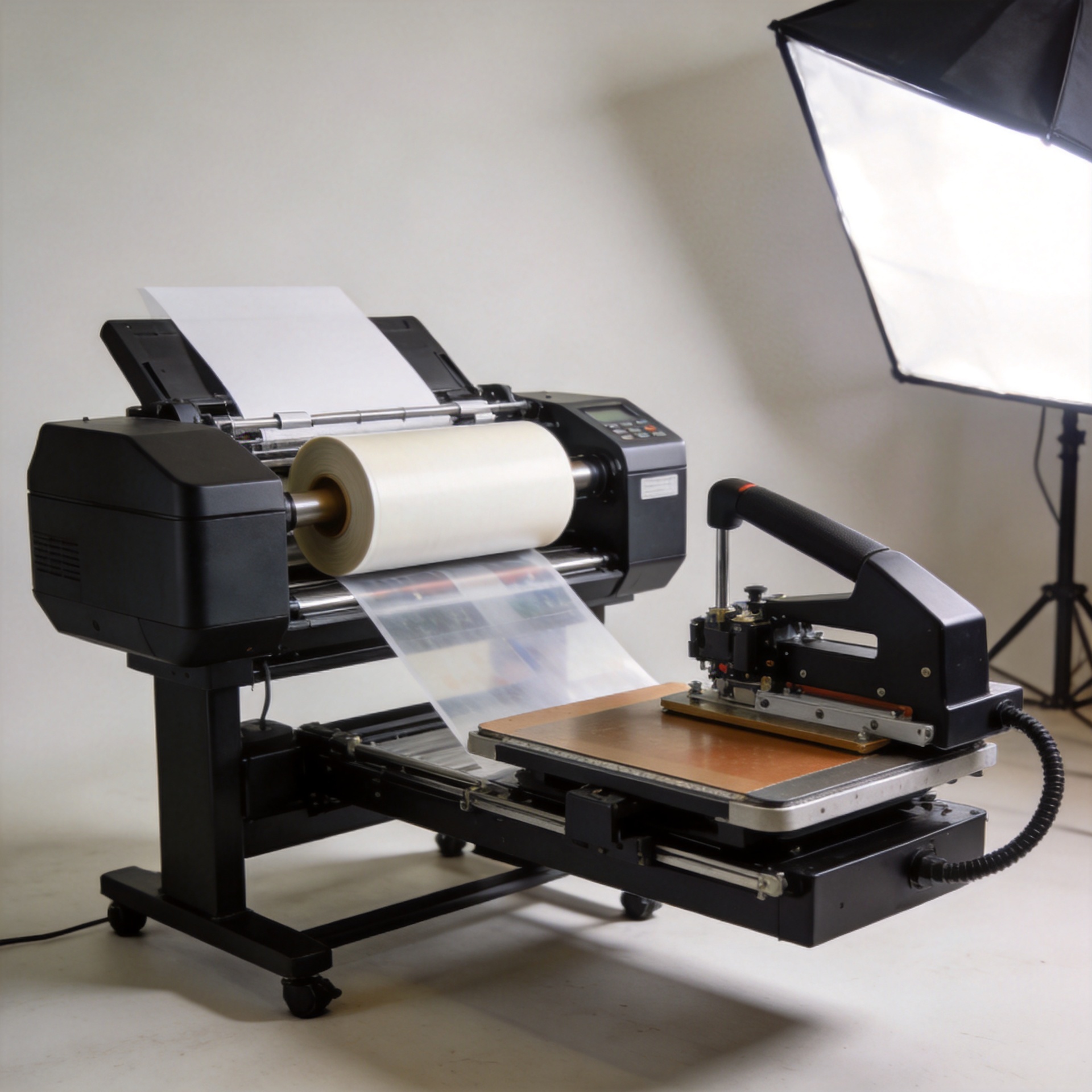
For buyers sourcing a flat heat press designed to work alongside DTF printing equipment, the Sunika High-Pressure Flat Heat Press Machine For DTF Printer is built specifically for DTF transfer applications. As a specialized DTF and UV printing equipment manufacturer—not a general printer reseller—Sunika offers factory-direct configurations and pre-purchase technical consultation to help buyers match their heat press selection to their actual production environment and DTF printer workflow.
Matching the Right Press to Your DTF Workflow
Choosing the right heat press for DTF transfers aligns three decisions: the right type (clamshell vs. swing-away), the right production capacity (entry vs. commercial), and the right operating parameters for your primary substrate mix. The biggest shift for buyers who make this well is realizing that the DTF film, ink system, and heat press are just as interdependent as the printer itself—and they interact in ways that aren't visible from the spec sheet alone.
Start with your most common substrate—typically cotton—confirm your baseline at 310–325°F, 12–15 seconds, medium to high pressure, and cold peel. Then build your substrate-specific parameter map from there. A well-matched, properly calibrated heat press is what turns high-quality DTF prints into durable, professional transfers that hold up through the washability expectations of European and North American apparel markets.