EN


How Small Businesses Can Assess UV DTF Sticker Printer Needs Before Buying
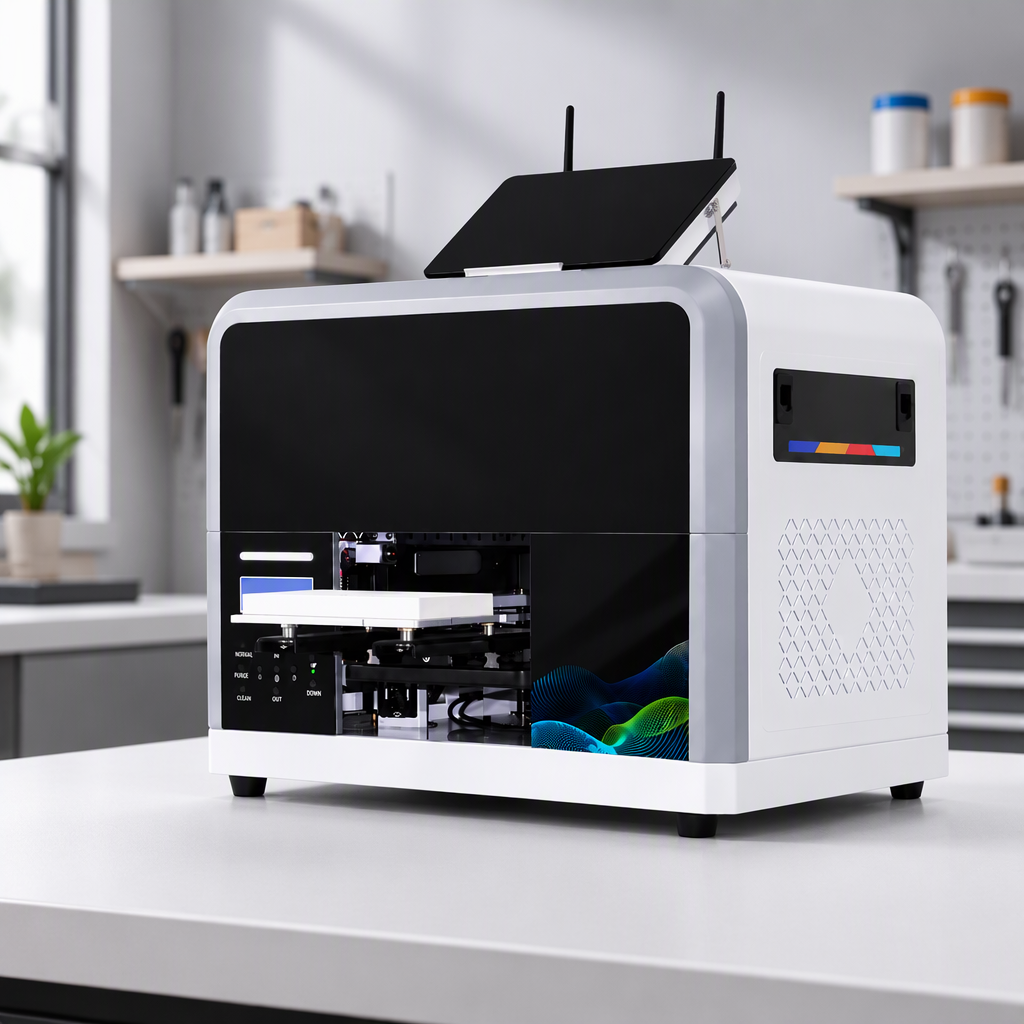
Buying a UV DTF sticker printer for small business can open a practical route into customized hard-surface decoration, but it is not a purchase to justify with a few attractive sample stickers. Before comparing machines, a small shop should confirm what it will decorate, how orders arrive, who will run the workflow, and whether in-house production improves the business more than outsourcing. This guide turns those questions into a decision checklist.
Start With the Products You Actually Need to Decorate
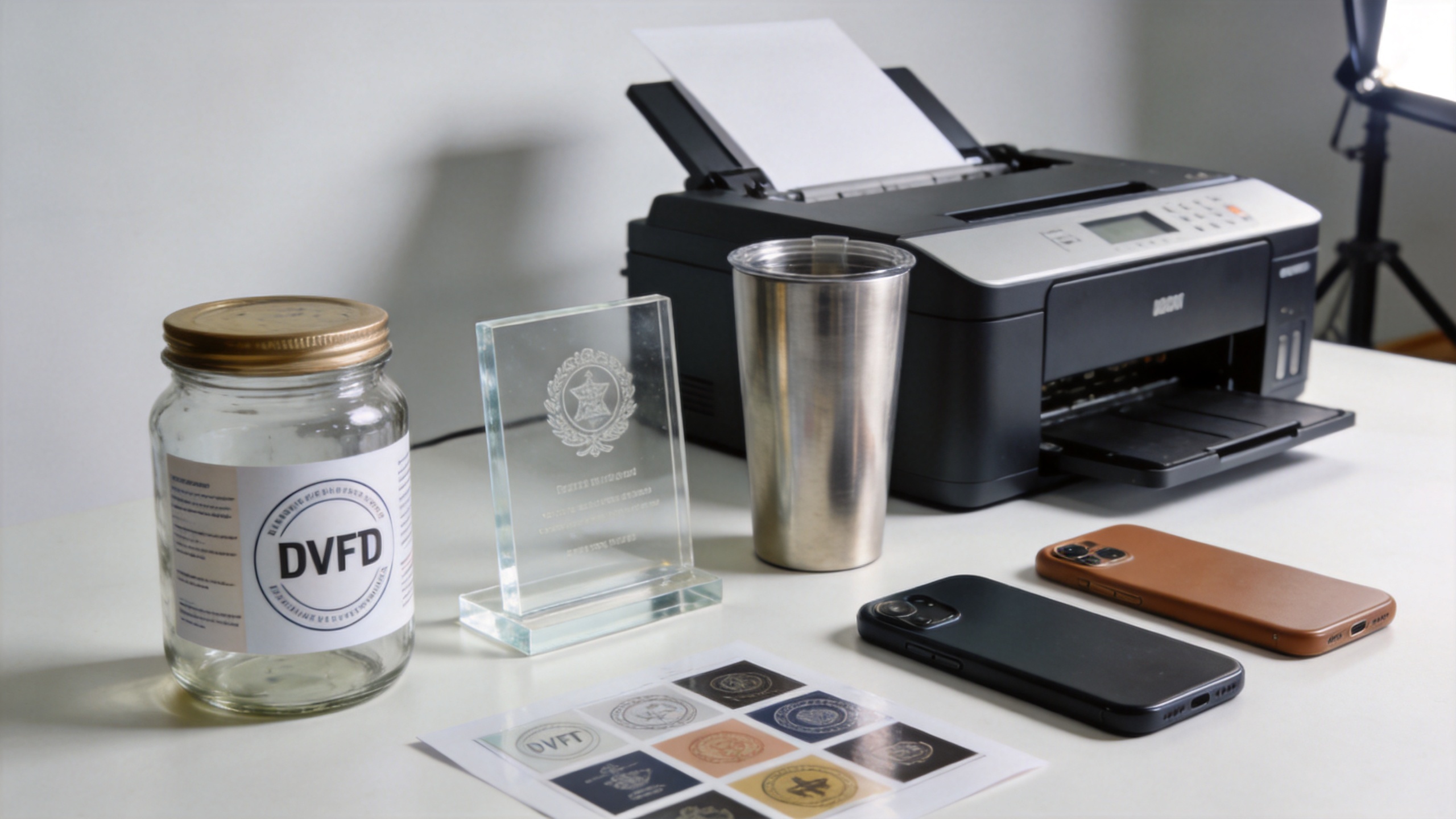
The first test for a UV DTF sticker printer for small business is product fit. UV DTF labels are commonly considered for hard, smooth or slightly curved items such as glass containers, acrylic pieces, metal accessories, plastic packaging, and personalized phone cases. That makes the technology relevant to gift shops, promotional-product sellers, custom drinkware businesses, and sellers of accessories. It does not mean every surface, coating, shape, or customer expectation will behave the same way.
Build a short sample list from real orders rather than imagined future products. Include the material, surface finish, curve level, decoration size, artwork detail, and expected handling after application. Then test representative samples through the full process: printing, laminating, transferring, curing time, packaging, and normal handling. A “printer for phone cases” can be a useful direction only when phone cases are a repeatable part of your order mix—not just a single inquiry.
- Which five to ten products create the most repeatable decoration demand?
- Are those products rigid or hard-surface items suited to transfer labels?
- Do customers need small logos, full-color artwork, variable names, or all three?
- Can your team test adhesion and appearance on the actual substrates you sell?
Map Order Structure Before You Estimate Machine Capacity
Small businesses often overfocus on maximum print width and under-measure order behavior. A better question is: how many production-ready jobs will move through the system in a normal week? Separate one-off samples, seasonal bursts, repeat wholesale orders, and rush jobs. Record artwork preparation time, the number of designs per order, label sizes, reprints, and the time spent applying labels.
For a UV DTF sticker printer for small business, capacity should be evaluated as a workflow, not a headline speed. A job is only complete after the artwork is prepared, the print is checked, the film is handled correctly, and the label is transferred onto the product. If your team only has time to run the equipment after packing orders, labor availability may be the limiting factor long before print output is.
Use a simple three-column log for two to four weeks: orders you currently outsource, orders you decline because turnaround is too slow, and orders you could upsell with personalized hard-surface decoration. This gives you a more reliable demand picture than a single peak-season week.
Compare In-House Production With Outsourcing Honestly
Purchasing is most defensible when in-house production solves a specific business problem: shorter approval cycles, more control over small batches, better margin on repeated work, or faster response for personalized orders. Outsourcing may still be the better choice when volumes are unpredictable, artwork changes frequently, or your team cannot maintain a consistent daily production routine.
| Question | In-house UV DTF may fit when… | Outsourcing may fit when… |
|---|---|---|
| Order frequency | Repeatable small batches arrive every week. | Demand is occasional or highly seasonal. |
| Turnaround | Customers value quick proofing and local production control. | Lead time is acceptable and rush work is rare. |
| Labor | A trained person can own daily checks and finishing. | No one can reliably run and maintain the workflow. |
| Product mix | Hard-surface decoration is central to your offer. | Most sales remain outside the technology’s application range. |
The comparison should include more than the printer price. Add consumables, sample waste, design preparation, maintenance time, packaging changes, training, and the cost of rework. Avoid assuming that every outsourced label becomes internal profit; some orders will still be better handled by a specialist partner.
Check the Production Workflow, Not Just the Machine
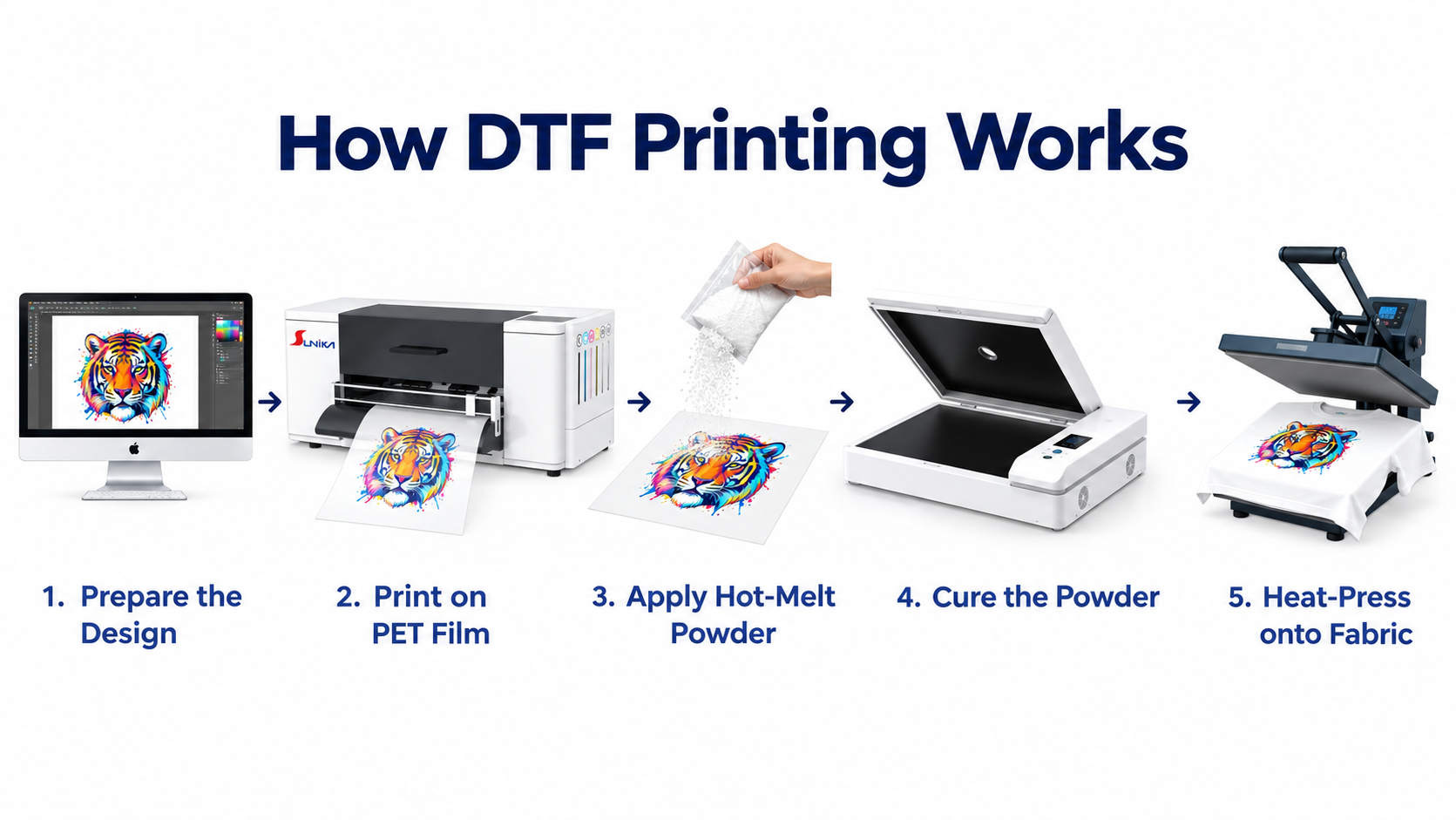
A UV DTF sticker printer for small business needs a repeatable operating routine. Ask a supplier to explain the daily startup and shutdown sequence, nozzle-check process, cleaning expectations, consumable storage, and what happens when the printer sits idle. Industry guidance around DTF-class workflows frequently highlights white-ink circulation, nozzle checks, and printhead cleaning as operational considerations. Treat these as planning items, not as proof that every model has the same automation or maintenance requirement.
Also inspect the physical workflow. Where will film, ink, printed sheets, finished labels, samples, and waste sit? Who approves color before a label is applied to sellable stock? How will you separate a customer’s approved design from a similarly named revision? A clear process prevents a small operation from losing time to avoidable reprints.
- Reserve a clean, stable production area with space for printing and finishing.
- Assign one owner for routine checks, cleaning records, and consumable ordering.
- Create a sample-approval step before printing a full batch.
- Document common substrates and application instructions for your staff.
- Set a reprint rule so quality issues are reviewed rather than quietly absorbed.
Request Proofs That Match Your Business Case
Supplier demonstrations are more useful when you bring your own files and substrates. Instead of asking only for a generic print sample, send the kind of small text, gradient, logo color, and product surface your customers order. Evaluate the proof after transfer and after normal handling—not only while it is still on the film.
For example, shops considering 30 cm-format equipment can review the confirmed product pages for the Sunika Sk30-3 UV DTF printer 300mm UV DTF Sticker Printer Triple F1080 and the SK-U301 30cm uv dtf printer epson i3200 printhead for glass phonecase as starting points for a supplier conversation. Confirm current specifications, workflow requirements, service scope, and suitability for your samples directly before making a purchasing decision.
Make a Go/No-Go Decision With a Short Scorecard
Score each category from 1 to 5: product fit, weekly demand, available labor, workspace readiness, maintenance ownership, supplier support, and the financial value of faster delivery. A UV DTF sticker printer for small business is usually a stronger fit when the total picture is balanced. A high score for creative opportunity cannot compensate for no reliable operator or no repeatable hard-surface order flow.
If the scorecard reveals gaps, use a staged approach: outsource while validating demand, buy samples and run substrate tests, train the intended operator, then reassess after a defined period. This decision-first method reduces pressure to purchase a machine simply because the technology looks versatile.
Final Takeaway
The right UV DTF purchase begins with evidence from your own order history. Match the equipment to real products, realistic weekly demand, staff time, maintenance discipline, and a workflow your team can repeat. When those elements align, a UV DTF sticker printer can support faster customization and more controlled small-batch production. When they do not, more testing or continued outsourcing may protect both cash flow and customer experience.