 EN
EN


DTF vs DTG vs Sublimation: Which Printing Technology Is Right for Your Business?
A print shop rarely needs a universal winner; it needs a workflow that suits the garments, order mix, and finish it sells. DTF, DTG, and sublimation can all produce compelling full-color work, but they arrive there through very different processes. The phrase dtf uv also causes a common mix-up: standard DTF is generally for textile transfers, while UV DTF creates adhesive decals for hard surfaces. They are complementary technologies, not substitutes for the same garment job.
For a custom-apparel business, start with four questions: Do you need coating or pretreatment? What consumables will you manage? Which fabrics dominate your orders? And what is the smallest run you need to make profitable? In practice, those answers are more useful than a long spec-sheet comparison.
First, separate garment DTF from UV DTF print
Garment DTF prints an image onto coated transfer film, applies adhesive powder, cures it, and then heat-presses the transfer onto fabric. It is designed for apparel and other flexible textiles. A uv dtf print, by contrast, uses UV-curable inks and adhesive films to make decals for hard, non-porous items such as tumblers, glass, metal, acrylic, and packaging. It does not replace DTG or sublimation for T-shirts.
The distinction matters most when you are building more than one product line. A business serving apparel, gifts, and branded hard goods may eventually use both technologies, but it should evaluate each against the materials it actually decorates.
DTF: the flexible option for mixed fabric orders
DTF is often the practical starting point when your order book includes cotton, polyester, blends, nylon, fleece, dark garments, and changing designs. Because the artwork is printed on film before transfer, the process can avoid garment pretreatment in many common workflows. That can simplify short-run production, especially when customers bring varied blanks or request full-color artwork with gradients and fine detail.
The practical trade-off is consumable discipline. A reliable printing dtf workflow depends on compatible ink, film, powder, curing, and heat-press settings. White ink management and daily maintenance still matter. DTF is flexible, but not automatic: test unfamiliar fabrics, stretch materials, and high-wear applications before promising a production result.
DTF can also suit small runs because it does not need screens or per-color setup. Transfers may be prepared ahead of time and applied later, which helps with repeat designs or rush fulfillment. For shops comparing compact equipment, the Sunika SK-A3 DTF Printer F1080 330mm A3 Direct to Film Printer is a relevant product category to review alongside your expected print width, production pace, and support needs.
DTG: a strong fit when cotton feel and direct garment printing lead
DTG prints directly onto the garment. It is commonly a strong fit for cotton-rich apparel, particularly when a soft hand feel and direct-to-garment workflow are high priorities. For businesses centered on premium cotton tees, retail samples, or artwork that benefits from a direct ink-to-fiber approach, DTG can be a focused and effective choice.
Its operational question is preparation. Dark garments and many production workflows require pretreatment, and consistent results depend on applying and curing that pretreatment correctly. DTG shops should account for garment staging, pretreatment space, humidity, maintenance, and the time needed to handle one garment at a time. It can be an excellent specialist process, but it is not necessarily the easiest method for a catalog full of polyester, nylon, and mixed-fiber blanks.
Sublimation: a focused option where polyester is the product
Sublimation uses heat to turn dye into gas so it bonds with polyester fibers or polyester-coated blanks. On the right substrate, it creates vivid, breathable decoration with no added transfer layer. That makes it highly attractive for light-colored polyester sportswear, performance apparel, promotional textiles, and coated hard goods.
The limitation matters as much as the benefit: sublimation is not a general cotton-printing solution and is not suited to dark garments in the way DTF or DTG can be. If your business is built around white or light polyester uniforms, it may be the simplest and most cost-effective production path. If customers regularly request black cotton hoodies, cotton/poly blends, or nylon jackets, you will need another process in the mix.
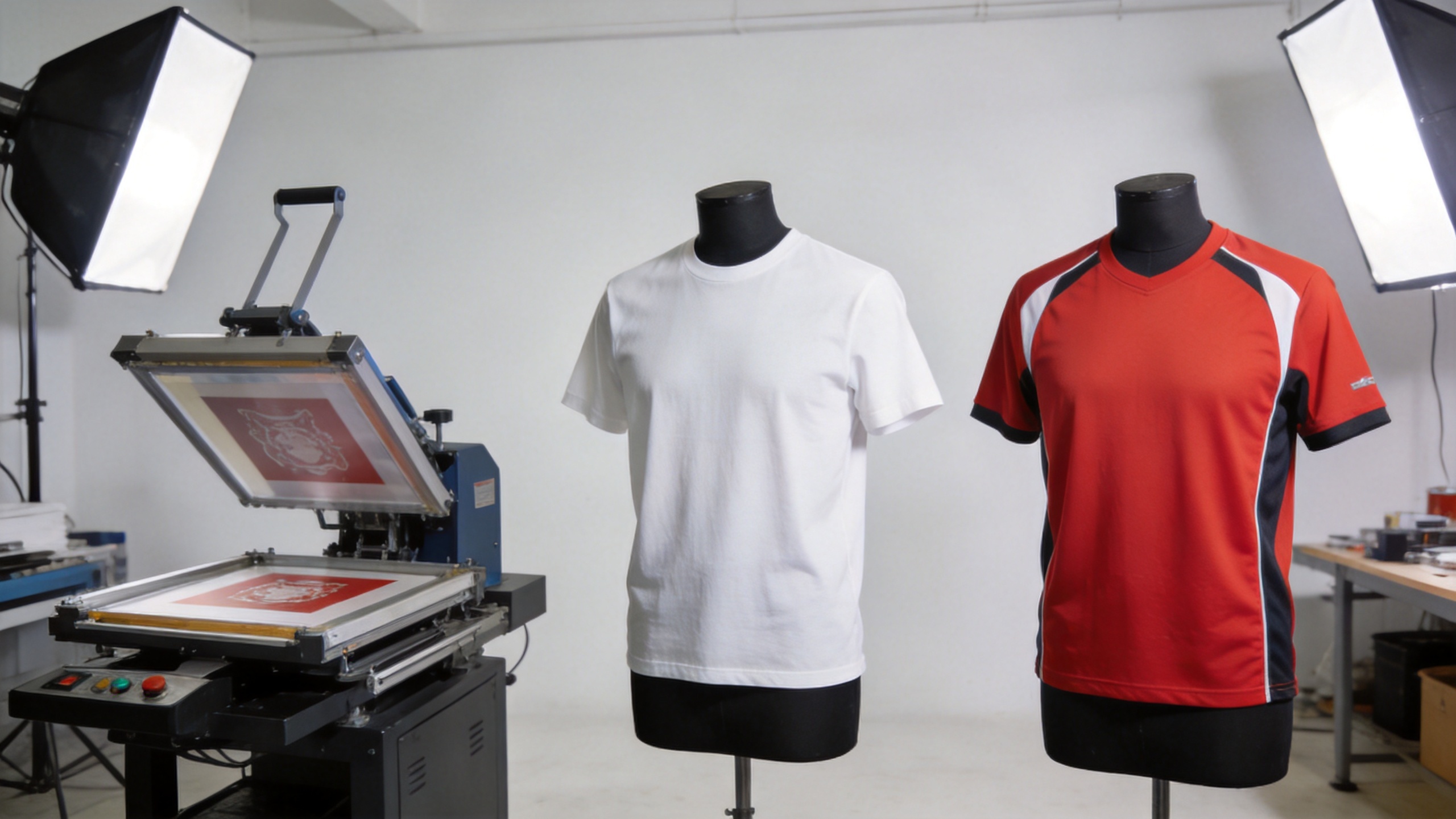
A practical comparison: coating, consumables, fabrics, and run size
| Decision factor | DTF | DTG | Sublimation |
|---|---|---|---|
| Preparation | Film-and-transfer workflow; typically no garment pretreatment for common applications | Direct garment workflow; pretreatment is often part of production, especially for dark garments | Requires polyester or polyester-coated blanks rather than a garment coating step |
| Consumables | Ink, transfer film, adhesive powder, and heat-press/curing workflow | Ink, pretreatment, and garment handling workflow | Sublimation ink, paper, and compatible polyester substrates |
| Typical fabric fit | Broad textile mix, subject to testing | Often cotton and cotton-rich garments | Light polyester and polyester-coated items |
| Small orders | Well suited to variable designs and low minimum runs | Useful for direct-on-garment, cotton-focused orders | Works well when compatible polyester goods are already in the order mix |
Use your product line—not trends—to choose
Choose DTF if you handle a mixed fabric catalog, dark garments, short custom runs, or designs that change frequently. Choose DTG if cotton apparel and a direct-print feel are central to your brand, and you are ready to manage pretreatment carefully. Choose sublimation if light polyester is the core of your catalog and you value a breathable, integrated finish.
If hard-surface stickers are part of your growth plan, assess UV DTF separately. A machine such as the Sunika Sk30-3 UV DTF printer 300mm UV DTF Sticker Printer Triple F1080 belongs in a hard-goods and label-production evaluation—not in a garment DTF versus DTG versus sublimation decision.
Where DTF UV research fits into the buying process
When teams search dtf uv, they are often comparing two adjacent capabilities: garment transfers and hard-surface decals. Treat dtf uv as a workflow question, not a shortcut to a single machine choice. A clear dtf uv plan separates fabric orders from sticker, tumbler, and packaging orders. For many growing shops, dtf uv research is the first step toward mapping those two revenue streams.
For apparel, a stable printing dtf routine begins with compatible film, ink, powder, curing, and pressing. Good printing dtf decisions also account for garment testing, white-ink care, and operator time. Before expanding capacity, review whether your printing dtf work is mostly short-run transfers, repeat gang sheets, or mixed-material orders. That distinction helps turn printing dtf from an equipment purchase into a controlled production system.
For hard goods, a uv dtf print is evaluated by surface adhesion, decal handling, and the end product’s expected wear. A uv dtf print is not a replacement for fabric DTF; it is a separate application route. Sample mugs, glass, acrylic, and coated items before committing to a uv dtf print offer. By keeping dtf uv, printing dtf, and uv dtf print decisions separate, you can build a broader catalog without confusing customers or operators.
Make the decision with a one-week sample test
Before investing, collect representative blanks and run the designs your customers actually order: a dark cotton tee, a polyester jersey, a blend, a stretch garment, and any nylon or fleece you sell. Track preparation time, consumable use, press or cure time, reprints, finish, and wash-test observations. That small test tells you more than a generic comparison because it exposes the constraints in your own workflow.
The right technology is the one that delivers consistent results on your highest-value jobs with a process your team can maintain. DTF, DTG, sublimation, and uv dtf print each have a place; the smart decision is to assign them to the substrates and order patterns where they are strongest.













