 EN
EN


DTF Printer Price Factors for Small Businesses
For a small apparel decorator, a DTF printer quote can look simple until you compare what is—and is not—included. The machine price matters, but it is only one part of a workable transfer-production budget. A reliable DTF printer setup combines printing, white-ink management, powder application, curing, workflow support, and service. Looking at the whole system helps a buyer avoid a low initial quote that creates expensive gaps after delivery.
As a procurement exercise, choosing a DTF printer starts with the orders you intend to produce: garment types, artwork size, daily transfer volume, available space, and the time someone can devote to maintenance. This guide explains the factors that influence a DTF printer price for a small business and the questions worth asking before requesting a comparable quotation.
Start With the Complete DTF Printer Workflow, Not the Printer Alone
A DTF printer produces the film print, but a sellable transfer normally also requires adhesive powder handling and heat curing. Some offers include a shaker and oven, while others quote those items separately. That difference is often the first reason two DTF printer prices cannot be compared line by line.
Build your budget around these workflow components:
- the DTF printer and its printhead configuration;
- white, color, and cleaning-ink handling;
- film, powder, and curing equipment;
- software, RIP workflow, computer compatibility, and color setup;
- freight, installation, operator training, spare parts, and support.
When reviewing dtf printers for small business, ask a supplier to identify each included item and any optional equipment. A complete list makes it easier to judge whether a compact starter system fits your operation or whether a separate curing workflow will add labor and floor-space needs.
Printhead Choice and Ink System Design Affect the DTF Printer Price
The printhead is one of the most important cost drivers in a DTF printer. Its configuration influences image quality, production pace, maintenance requirements, and the price of replacement parts. A lower-cost configuration can suit intermittent production, while a more production-oriented arrangement may make sense when orders are steady and turnaround matters.
White ink deserves special attention because pigment settlement and circulation affect daily operation. Search evidence for DTF maintenance consistently points to nozzle checks, agitation or circulation, cleaning routines, and consumable parts as practical ownership considerations. Rather than assuming any DTF printer is maintenance-free, ask how white ink is circulated, what the daily routine involves, and which wear items are expected to be replaced.
These questions do not make one DTF printer universally better than another. They help you identify the system whose maintenance routine and service plan match your team’s skills and production schedule.
Print Width, Throughput, and the Right Scale for a Small Shop
Print width changes both the purchase price and the way a DTF printer fits into production. A compact format can be practical for logos, left-chest graphics, samples, and modest custom orders. A wider platform can handle larger gang sheets and more transfer layouts per run, but it may require more space, a higher equipment budget, and a workflow designed to keep capacity productive.
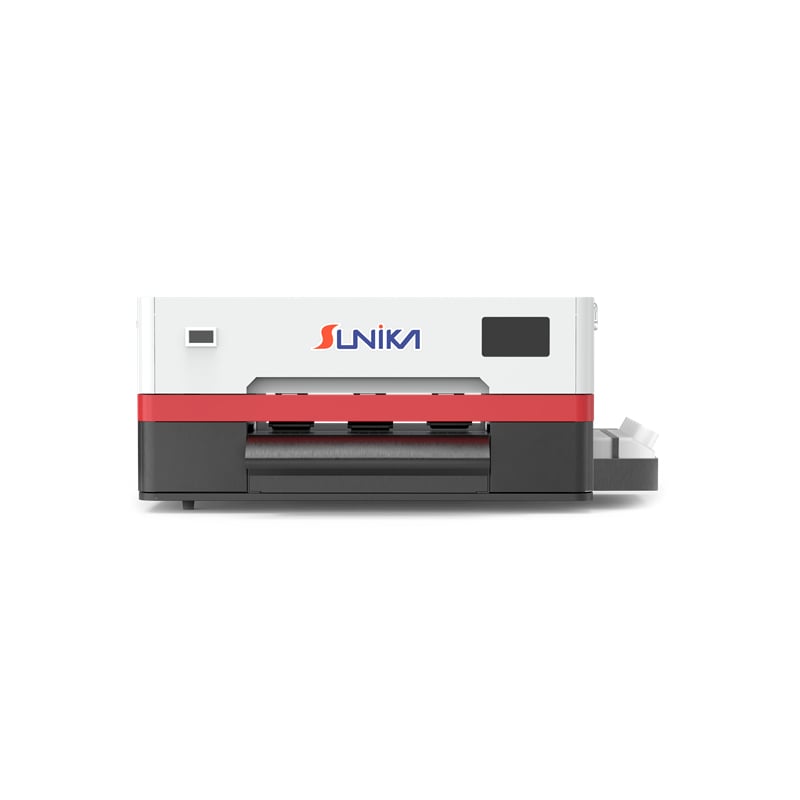
For many dtf printers for small business, an A3/330 mm format is a useful point of comparison because it balances compact placement with broader apparel artwork needs. For example, the Sunika SK-A3 DTF Printer F1080 330mm A3 Direct to Film Printer provides a real product page to examine alongside your own size and order requirements. Do not select width by the largest image you might print once; use your typical order mix and expected daily workload.
Bundled Equipment, Software, and Facility Readiness Shape the Quote
A DTF printer quotation can include different levels of readiness. One package may provide only the printer, while another may include powder application, curing equipment, basic consumables, and workflow software. The fuller package can cost more upfront but may remove uncertainty from the initial setup.
| Budget factor | Why it changes the total | What to confirm |
|---|---|---|
| Shaker and curing equipment | Turns printed film into a finished transfer workflow | Capacity, footprint, electrical requirements, and whether it is included |
| RIP software and setup | Supports artwork preparation and color workflow | License scope, supported operating system, and training included |
| Initial consumables | Determines how quickly you can begin producing | Film, powder, inks, cleaning supplies, and suggested reorder plan |
| Freight and installation | Can change the landed cost substantially | Shipping terms, installation responsibilities, and utility preparation |
Before approving a DTF printer, verify ventilation, power, workspace, humidity management, and safe material handling in your facility. These practical details influence whether the system starts smoothly and remains easy to operate.
Training, Service, and Spare Parts Are Price Factors Too
A small business often has limited downtime tolerance. That makes training, technical communication, remote troubleshooting, and access to routine parts relevant to the true cost of a DTF printer. A quote with a lower machine price but unclear support can be harder to evaluate than one that states onboarding, response channels, recommended spares, and maintenance guidance.
Ask suppliers for a written scope covering installation support, operator training, warranty terms, troubleshooting process, and which consumables or parts are normally stocked. Sunika focuses on DTF and UV printing equipment, so buyers can also use supplier discussions to clarify the practical setup and after-sales expectations for their intended application. Keep the conversation specific to confirmed product scope rather than relying on unverified performance promises.
A Practical DTF Printer Quote Checklist
- Describe your expected transfer sizes, order volume, and target turnaround.
- Request the exact DTF printer model, printhead configuration, and included workflow equipment.
- Separate equipment price, consumables, freight, installation, training, and optional upgrades.
- Confirm white-ink maintenance procedures and the recommended routine for idle periods.
- Check software, electrical, ventilation, workspace, and operator requirements.
- Compare warranty, technical support, spare-parts availability, and the supplier’s response process.
The most suitable DTF printer price for a small business is not necessarily the lowest headline number. It is the quote that clearly matches your production needs, includes the workflow you need to start, and gives you a realistic plan for maintenance and support. With a complete comparison, you can request pricing confidently and choose a system that supports sustainable transfer production.













