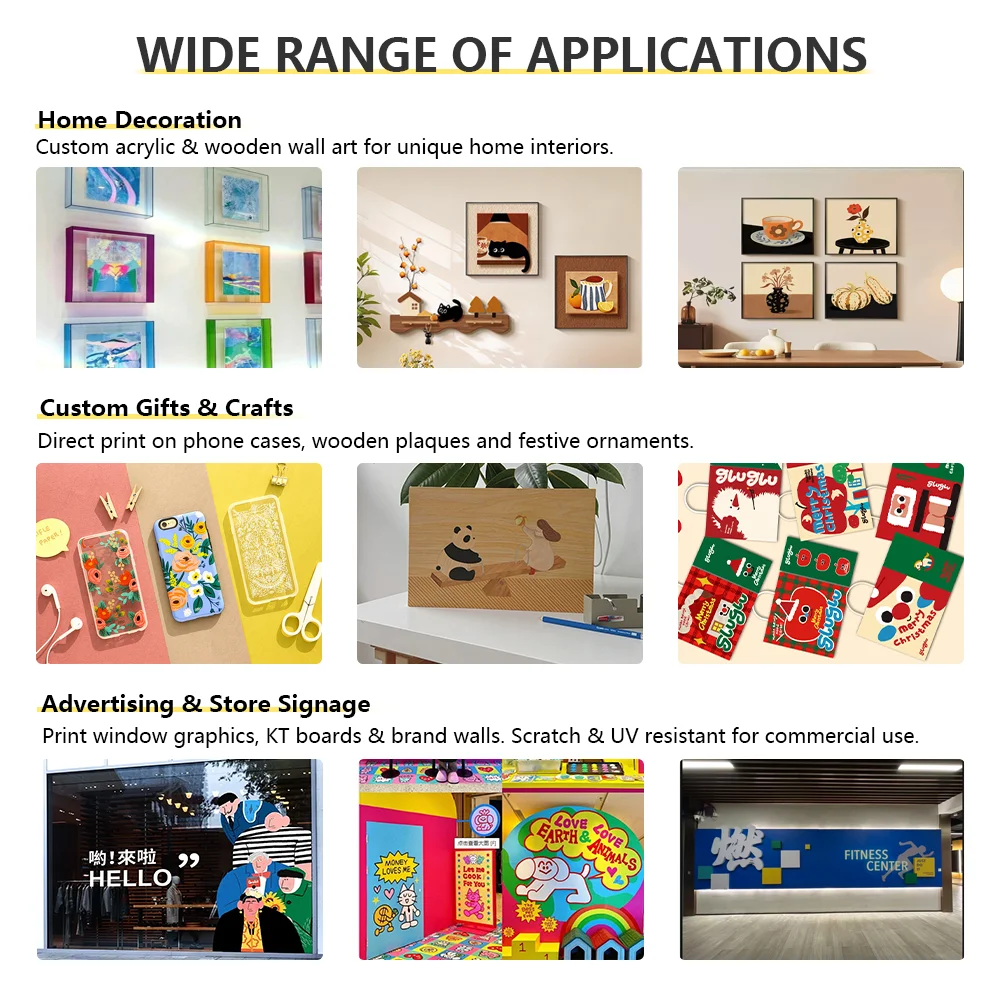
1.Q: What materials can a UV printer print on?A:UV printers are versatile flatbed digital printers capable of printing on almost any substrate. Common applications include acrylic, PVC, wood, metals (aluminum/stainless steel), glass, ceramic tiles, leather, ABS, TPU/silicone phone cases, corrugated boards, and cylindrical objects (tumblers, bottles, candles).
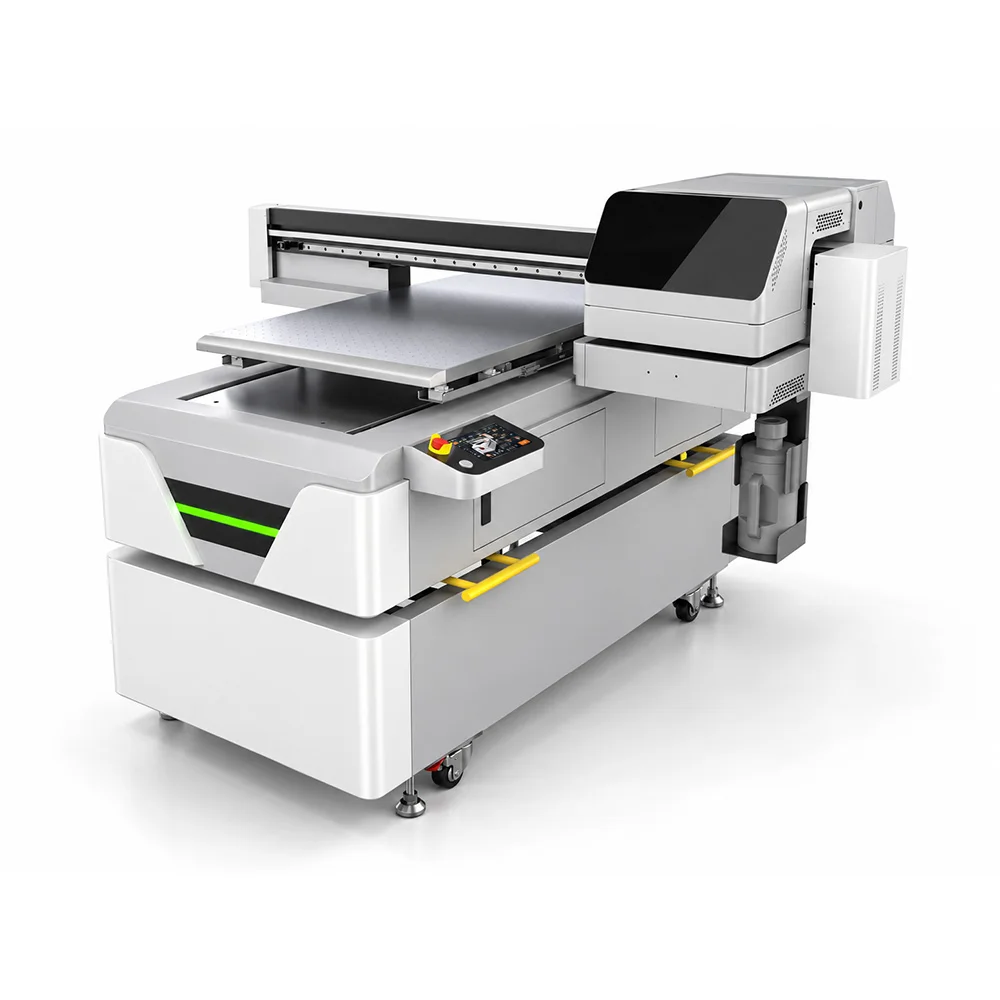
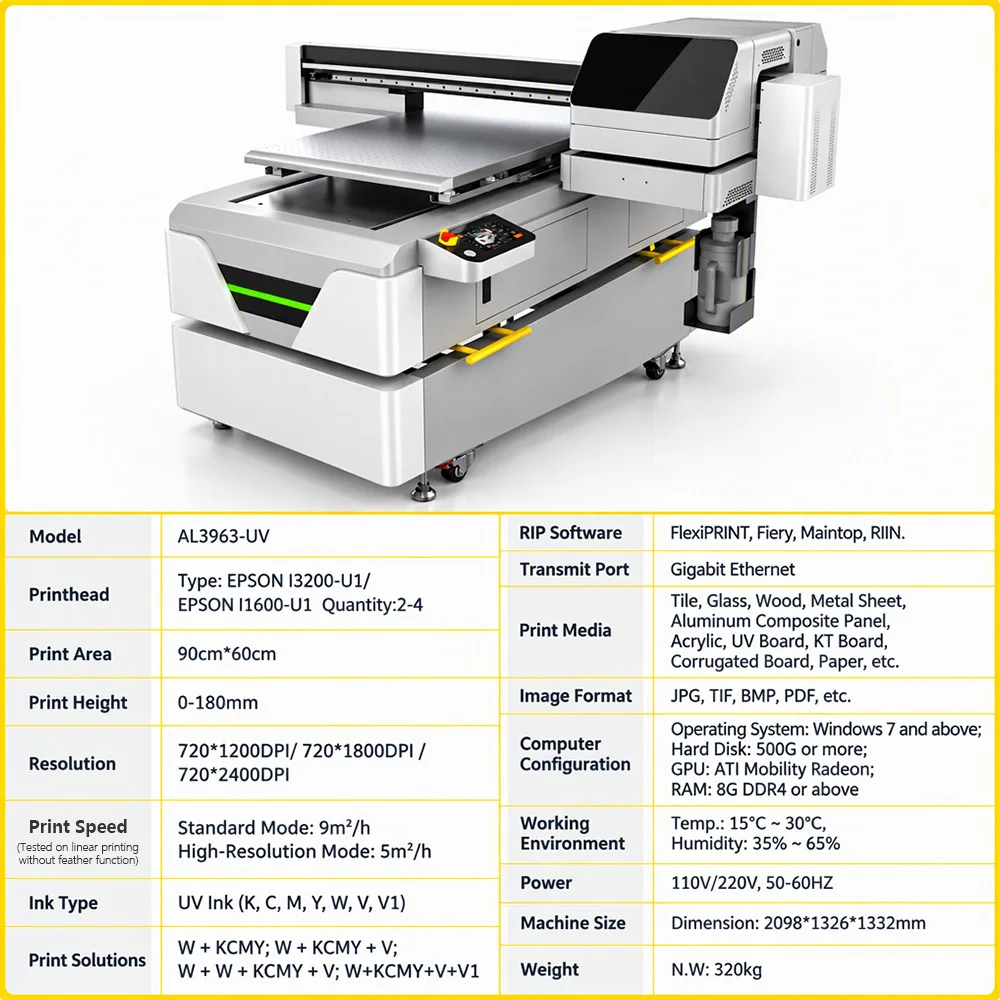
UV Flatbed Printer Printing Machine with I3200 Print Head Glass Metal Leather Pvc Plastic Printing Large Format 6090 Printer2.Q: Does printing on smooth or dense surfaces like glass, metal, or ceramics require pre-treatment?
A: For dense and non-porous surfaces such as glass, metal, and polished ceramic tiles, wiping a dedicated UV primer before printing is recommended. Alternatively, machines configured with a primer print channel can jet it synchronously to guarantee maximum adhesion and scratch resistance.
a5 uv printer3.
Q: What is the function of Varnish (Gloss) in UV printing?
A: Varnish serves dual purposes: visually, it adds a luxurious glossy, spot-embossed, or matte finish; functionally, it forms a protective barrier over the colored ink, significantly boosting scratch, water, and UV weather resistance.
uv printer a4
4.Q: How long does the UV print last indoors and outdoors? Will it fade?
A: Indoors, protected from direct sunlight and abrasion, prints generally last 5–8 years without visible fading. For outdoor
signage, prints typically maintain vibrant color for 2–3+ years, which can be further extended by adding a UV varnish overcoat.
small uv printer
5.Q: Will colors look dull or transparent on dark or clear substrates?
A: Not at all. The printer supports simultaneous White + CMYK printing. On clear acrylic or dark surfaces, it prints a dense,
opaque white underbase first, ensuring upper colors remain vibrant, opaque, and true-to-life without color bleed-through.
uv flatbed printer machine
6.Q: How does the printer prevent white ink sedimentation and nozzle clogging?
A: Because titanium dioxide in white ink tends to settle, machines integrate an automatic White Ink Circulation and Stirring
system across ink tanks, sub-tanks, and dampers. Combined with scheduled automated purging and sealed moisturizing capping stations, nozzle clogs are effectively prevented.
single pass uv printer
7.Q: Does operating a UV printer require extensive technical training?
A:The process is straightforward: 1) Import artwork into the RIP software to layout and set spot colors; 2) Position substrates on the flatbed; 3) Trigger auto-height sensor; 4) Click print. Most operators learn the full workflow within half a day through video guides.
uv printer machine
8. Q: What is the difference between Hard UV ink and Soft/Flexible UV ink?
A:ard UV ink provides high hardness and maximum scratch resistance on rigid substrates like acrylic, glass, wood, metal, and ceramic tiles. Soft/Flexible UV ink can stretch and bend without cracking, specifically formulated for leather, flexible TPU cases, canvas, and soft films.
uv inkjet printer
9. Q: How should the machine be maintained during holidays or idle periods (several days to weeks)?
A: For short idle periods (3–5 days): run an automated cleaning cycle and fill the capping station with moisturizing liquid to seal the nozzle face. For extended shutdowns (>1–2 weeks): flush ink channels with specialized cleaning solution and charge printheads with storage preservation fluid.
a3 uv flatbed printer
10. Q: How do international buyers receive technical support and troubleshooting assistance?
A: Contact us for operation videos or remote service guidance.
 EN